Automation increases efficiency in pet food packaging by reducing manual handling, stabilizing production speeds, and improving line consistency.
- Consistent production speeds with minimal variability.
- Reduced reliance on manual labor for repetitive end-of-line tasks.
- Improved product flow between bagging, boxing, and palletizing.
- Reduced risk of human error and production interruptions.
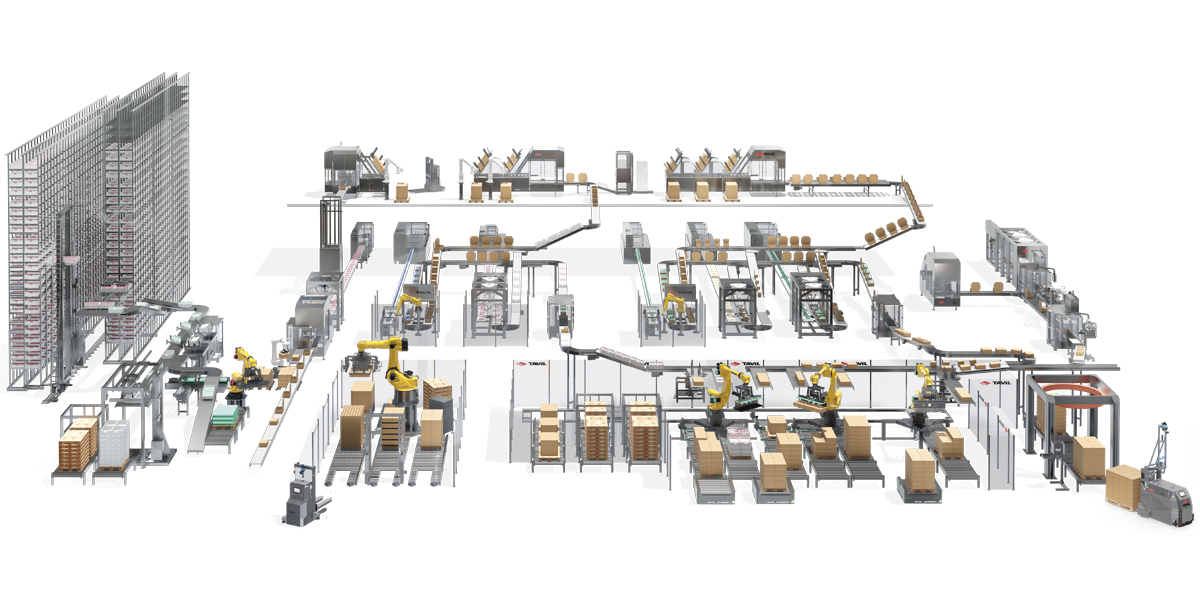
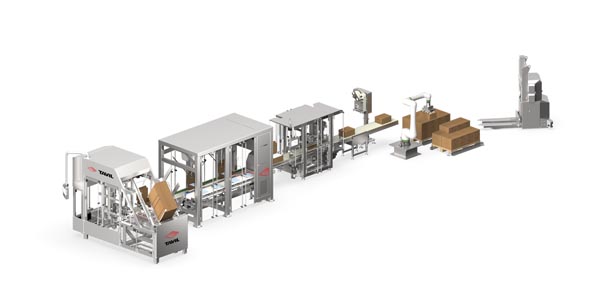
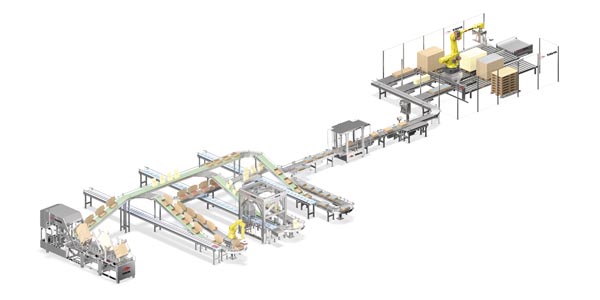
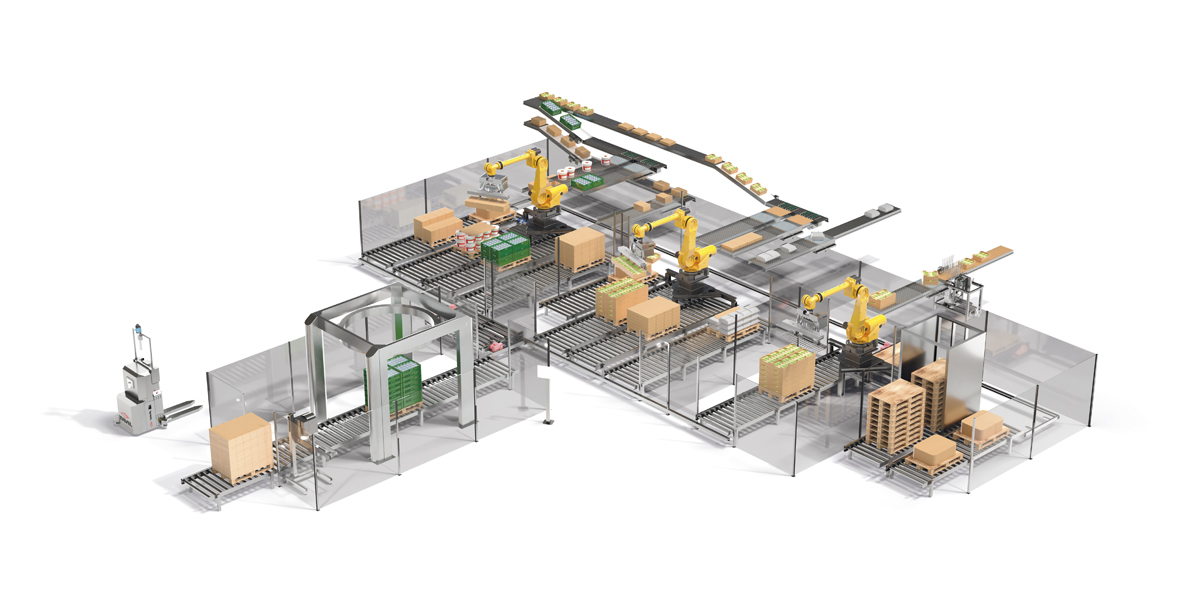
End-of-line automation in pet food typically includes case forming, robotic packaging, case sealing, and robotic palletizing systems.
- Automated case forming and sealing equipment.
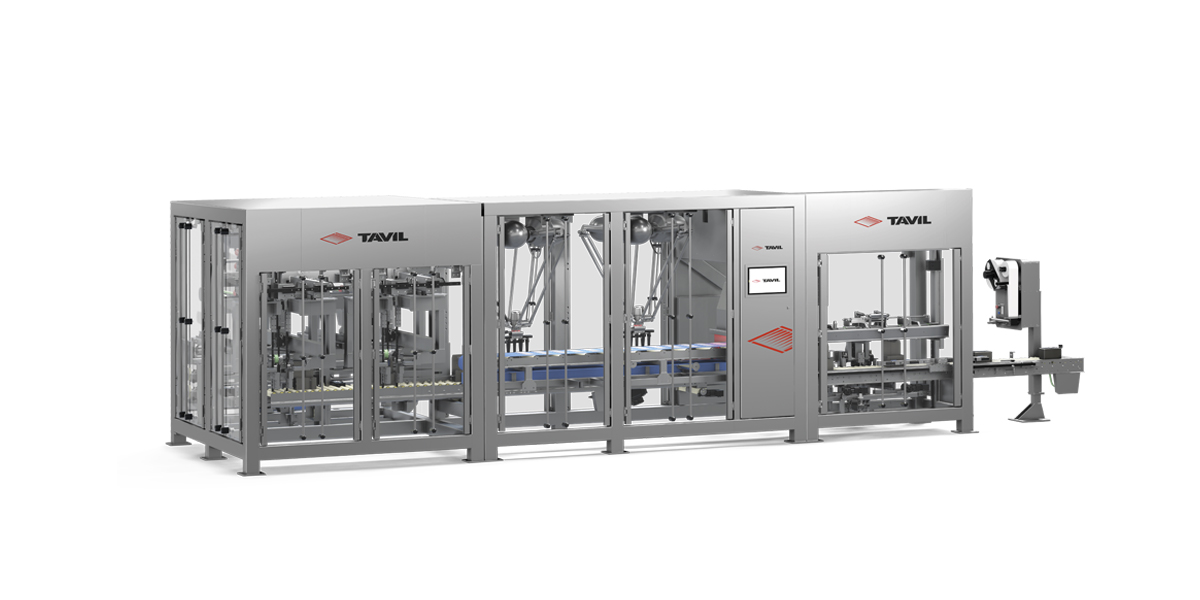
- Robotic pick-and-place systems for bags or pouches.
- High-speed robotic palletizing solutions.
- Integrated conveyor and product handling systems.
Automated pet food packaging systems typically handle between 10 and 40 cases per minute, depending on the product format, bag size, and line configuration.
- Speed depends on bag weight, size, and product type.
- Robotic systems allow for scalable throughput based on production needs.
- Multi-lane configurations can increase packaging capacity.
- Integrated buffer systems help maintain consistent line speeds.
Robotic palletizing improves production efficiency by increasing palletizing speed, ensuring consistent pallet quality, and reducing manual labor.
- High palletizing accuracy and repeatability.
- Ability to handle multiple bag sizes and box formats.
- Improved workplace ergonomics and worker safety.
- Consistent pallet stability for transport and storage.
Yes, modern automated systems are designed to handle multiple bag sizes and packaging formats through programmable format changes.
- Automatic or rapid format changes between SKUs.
- Flexible gripping systems for different bag types.
- Software-based recipe management for product formats.
- Reduced downtime when changing production batches.
The return on investment for automation in pet food manufacturing typically ranges from 1.5 to 3 years, depending on production volume and labor costs.
- Reduced labor costs in end-of-line operations.
- Increased production output and line efficiency.



 }
}