Automation improves efficiency in the packaging of frozen and prepared meals by stabilizing production speed, reducing manual handling, and optimizing end-of-line operations.
- Consistent throughput in the production of trays and boxes with a wide variety of products.
- Reduced manual handling in cold or frozen environments.
- Improved synchronization between filling, sealing, and packaging.
- Increased operational reliability and line uptime.
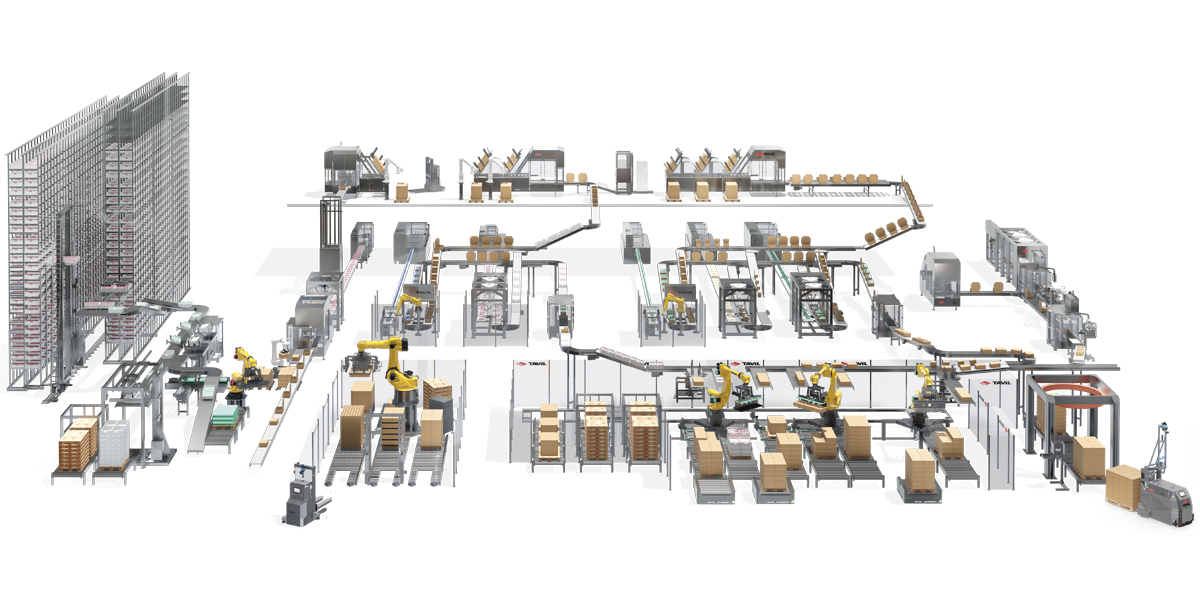
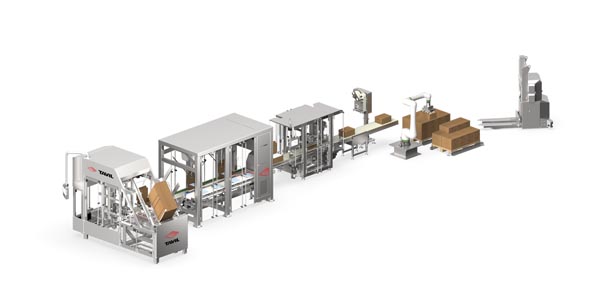
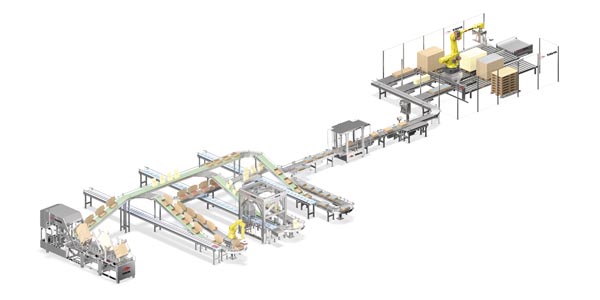
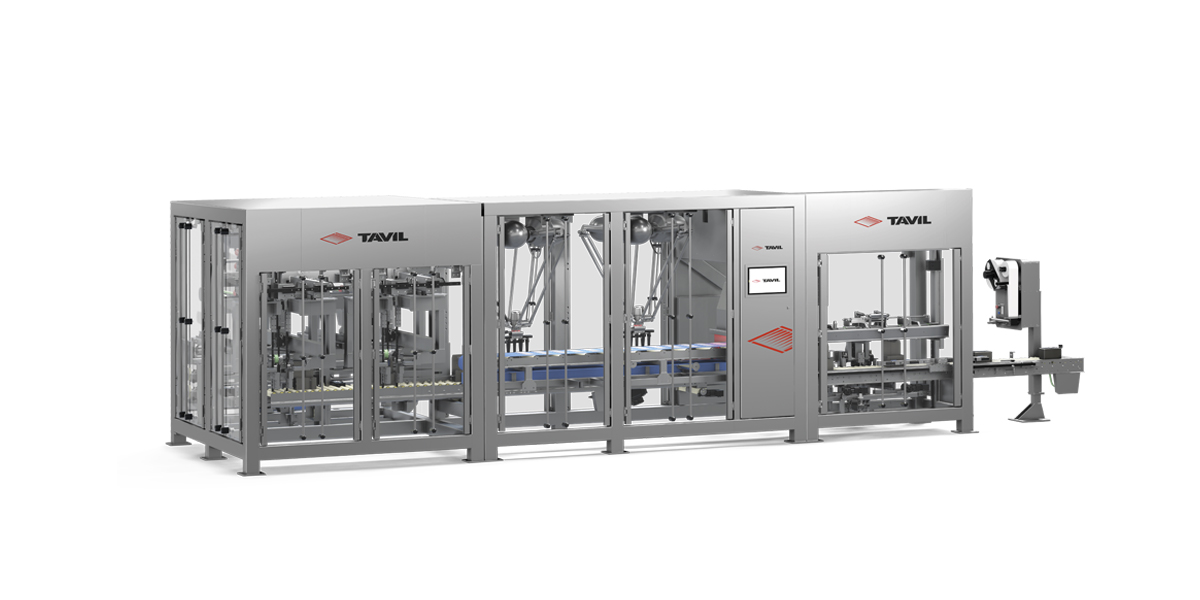
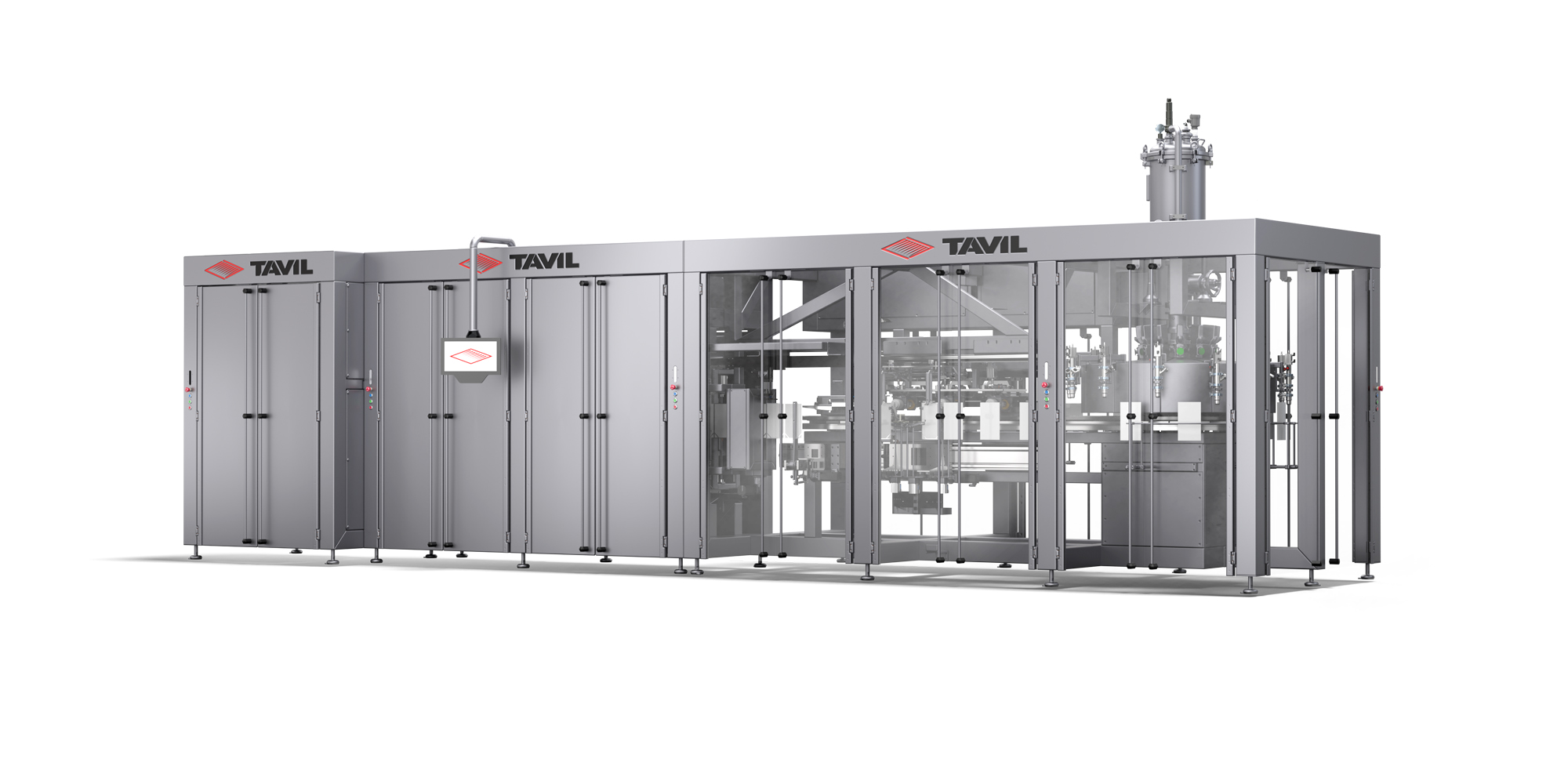
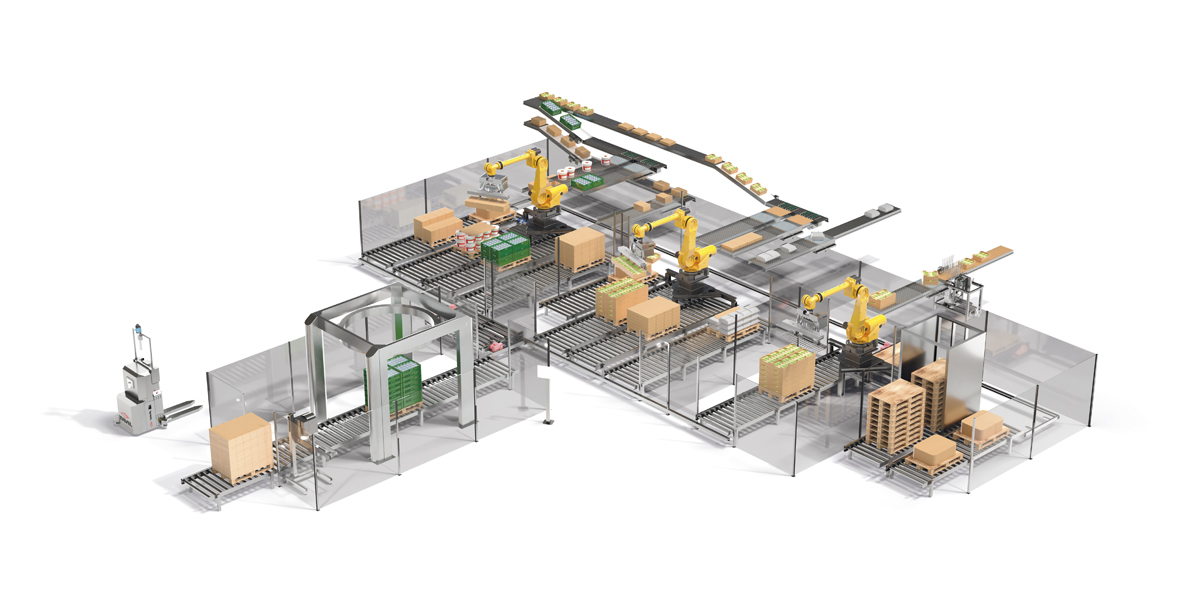
Typical end-of-line automation includes case forming, robotic tray or carton loading, case sealing, and palletizing systems.
- Automated case forming and sealing equipment
- Robotic pick-and-place systems for trays and cartons
- Flexible palletizing solutions for multiple case formats
- Integrated conveyor systems designed for cold environments
Yes, automated systems are designed to handle multiple tray sizes, box formats, and SKU variations with programmable changeovers.
- Multi-format handling for trays, sleeves, and boxes
- Programmable recipes for different SKUs
- Quick changeover capability between production batches
- Flexible gripping systems adapted to various packaging formats
Robotic palletizing improves pallet uniformity, production speed, and worker safety in frozen food manufacturing.
- High palletizing accuracy and repeatability.
- Ability to handle boxes of varying weights and dimensions.
- Reduced worker exposure to cold storage conditions.
- Greater pallet stability for frozen food distribution chains.
Modern automation systems are designed to operate reliably in cold and frozen environments, thanks to the appropriate selection of materials and components.
- Use of components suitable for low temperatures.
- Corrosion-resistant materials and protective housings.
- Reliable motion control in temperature-controlled areas.
- Optimized integration with freezing and cold storage workflows.
The return on investment (ROI) for automating frozen and prepared meals depends on production volume, product variety, labor costs, and improvements in operational efficiency.
- Reduction of labor-intensive packaging tasks
- Increased production throughput and line stability
- Faster format changeovers in high-product-variety production environments
- Increased operational uptime and reduced downtime



 }
}