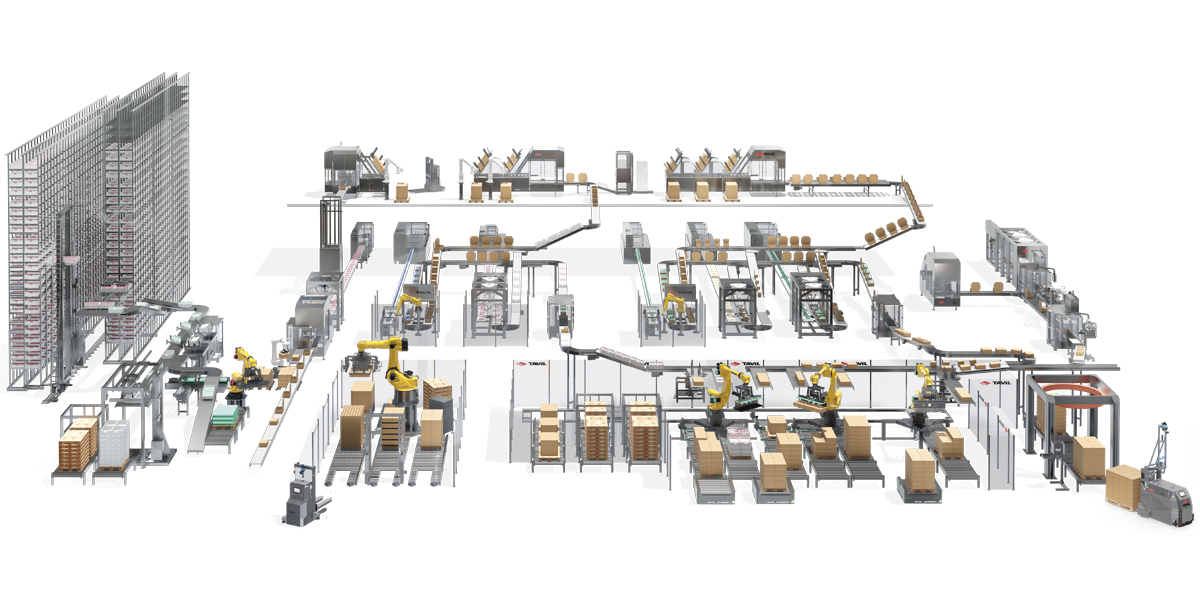
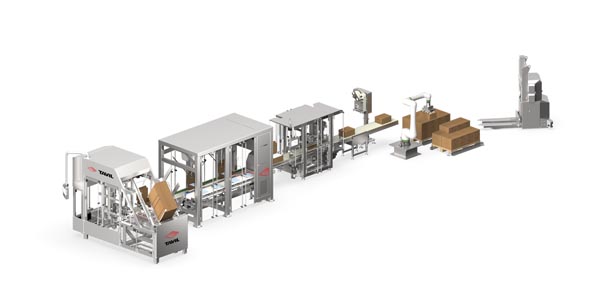
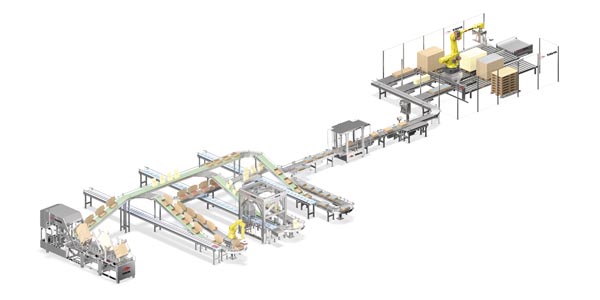
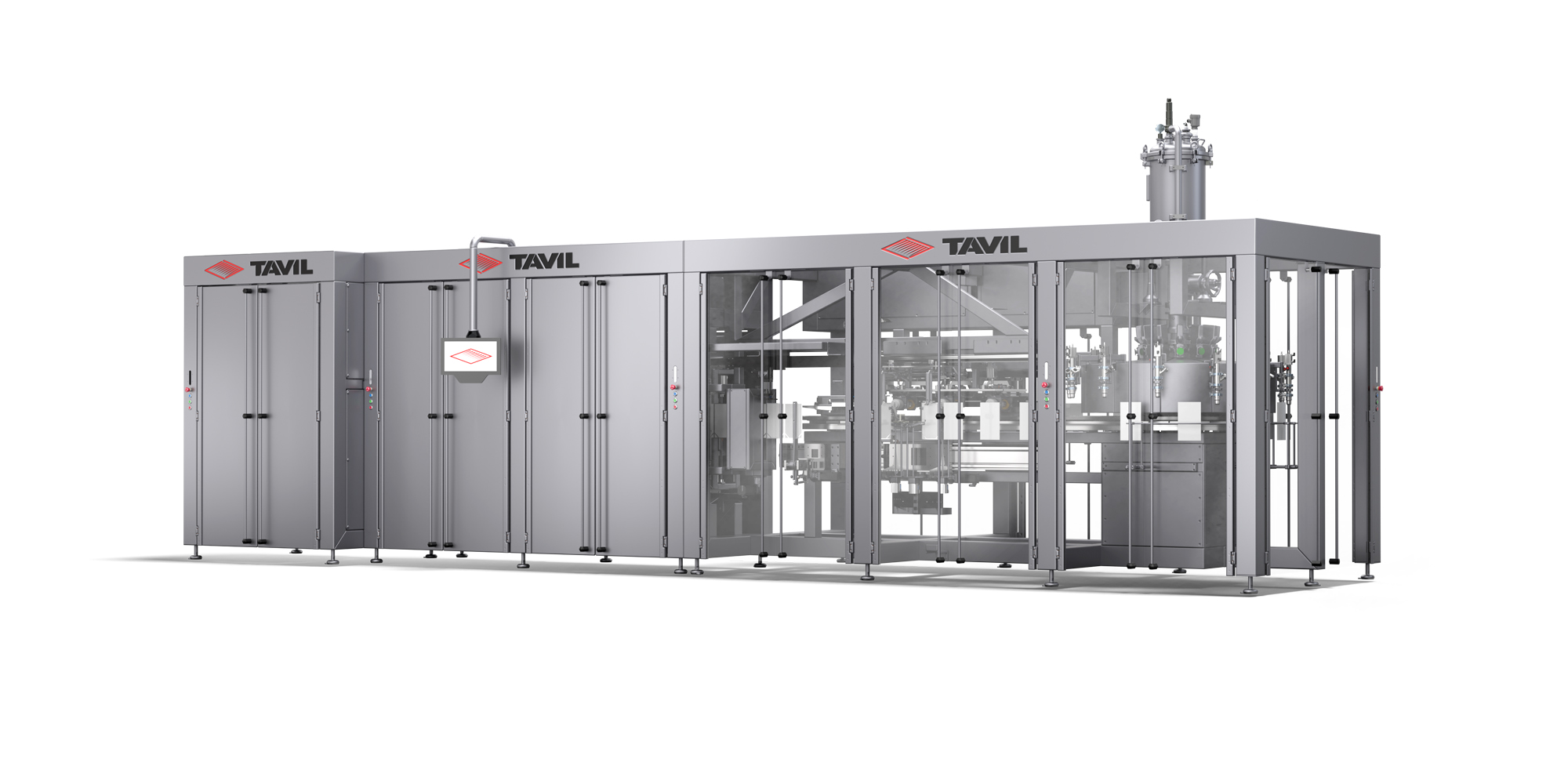
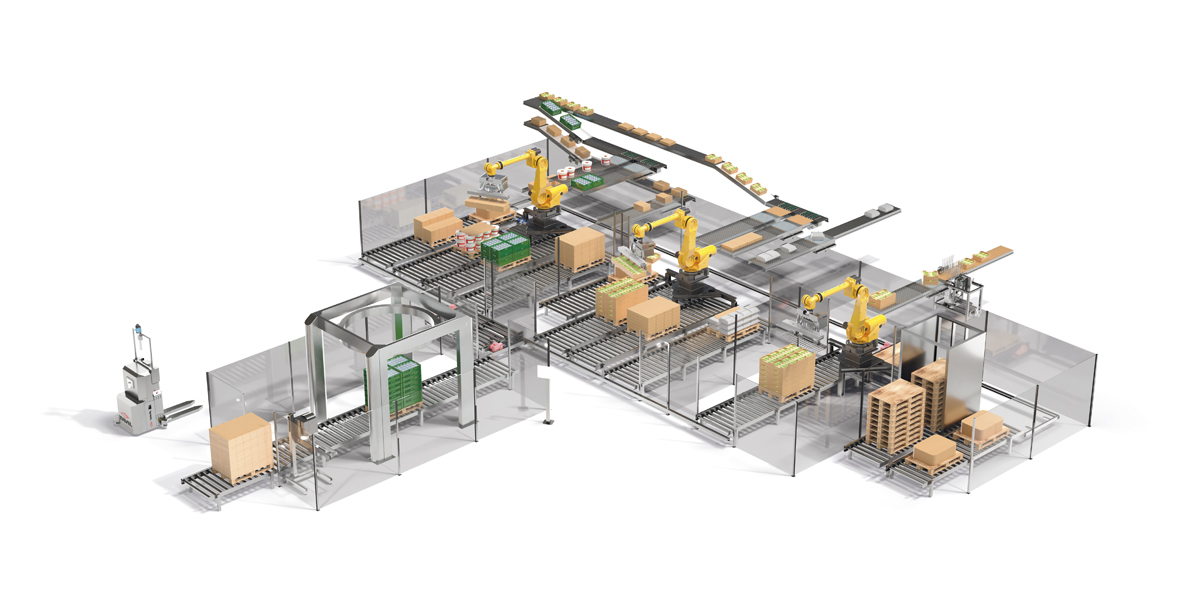
End-line automation in the meat industry is applied at the end of the production chain through automatic box forming, product loading, sealing, palletizing, wrapping, and labeling.
It offers various packaging options to differentiate the product at its final destination, incorporates box formers that produce perfectly shaped boxes and guarantee product integrity, increases the efficiency of packaging areas, and employs automated systems that boost production without adding manual labor.
It reduces labor costs, as automatic packaging lines can operate 24/7, and improves the efficiency of the packaging area by increasing packaging and palletizing speed, increasing the productive capacity of factories, standardizing box sizes and product packaging, and allowing companies to reduce the final price of products by lowering their costs.
A multi-format packaging line can change formats in seconds, switching from a standard shipping carton to a display-ready box.
This reduces uncertainty regarding potential new formats or future requests, allows for easy SKU changes without manual adjustments, and enables any operator to start up the line and change formats without requiring engineering knowledge.
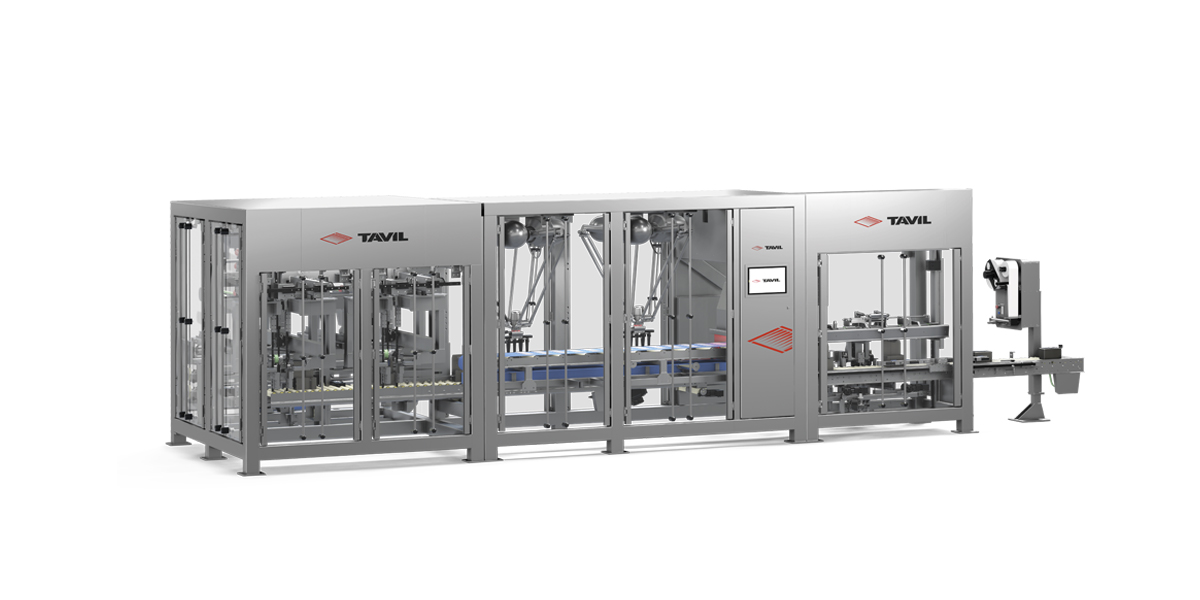
There are different solutions depending on the type of product and the speeds; for example, if the product is heavy, an anthropomorphic robot is usually more suitable, while for lighter products a delta robot may be more convenient.
A Maxpallet palletizer has a multi-format head capable of changing the size of the head itself and adjusting the movements according to the palletizing pattern, recognizing the shape with sensors and machine vision, incorporating a multi-format head and more than one pallet position and using software that allows the system to identify and change between sizes automatically.
Automating a meat packaging line makes sense when production volume is significant and labor costs for packaging and palletizing are high compared to the overall operation.
- When the company seeks to reduce labor costs.
- When it wants to improve its financial results through investments that reduce future operating costs.
- When the end user requests boxes with a better visual finish and different designs, or when standardized packaging is a requirement of the end customer.



 }
}