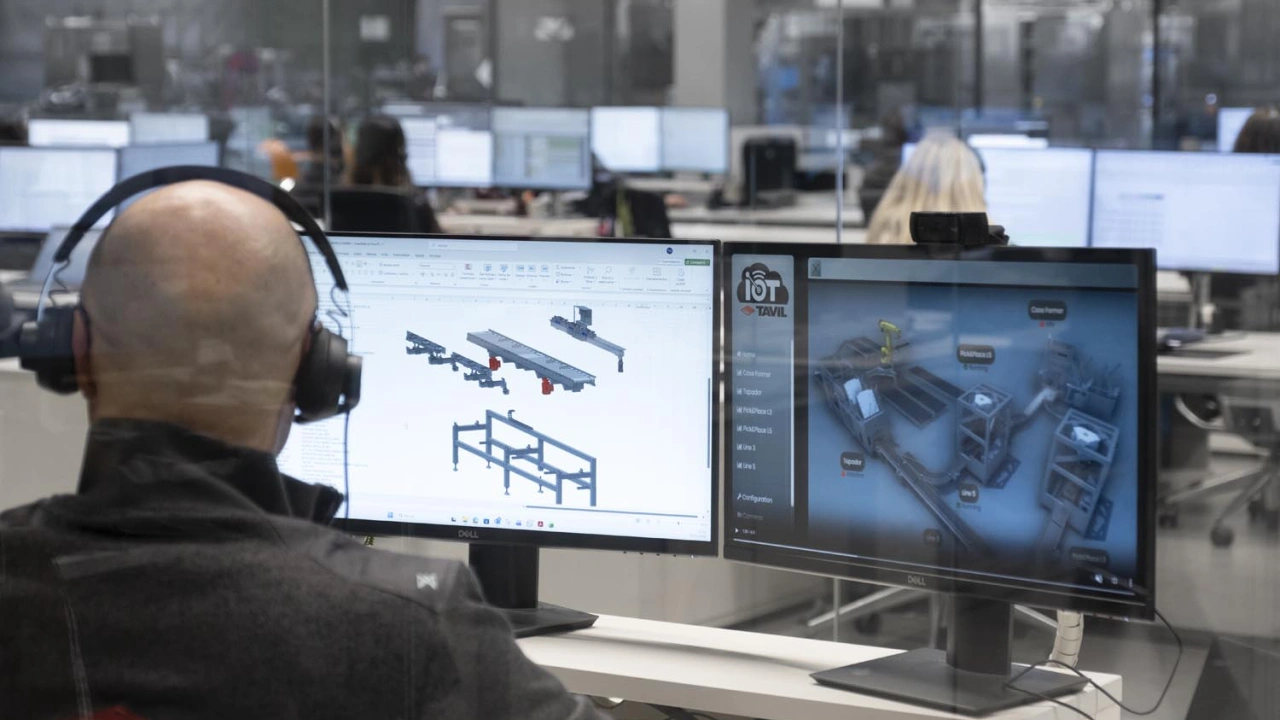
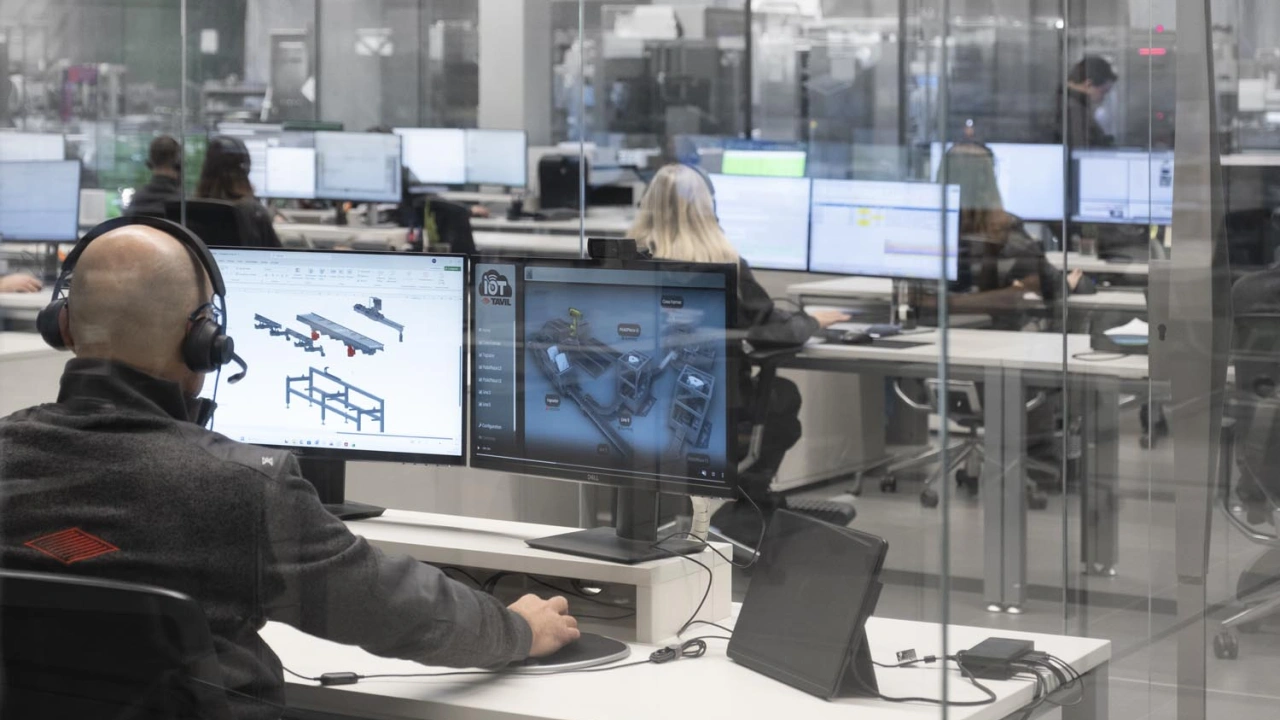
In a constantly evolving industrial environment, TAVIL drives the competitiveness of its plant through cutting-edge technologies for Industry 4.0. Our digital solutions transform data into strategic decisions, optimizing each stage of the end-of-line with intelligent management systems, real-time monitoring, and advanced artificial vision.
Global Management System (GMS)
01
GMS software allows you to digitize your factory
Boost productivity: streamline operations and significantly minimize downtime.
Improve quality control: reduce waste and ensure consistent product standards through strict traceability.
Smarter decision-making: provide your team with real-time information to act immediately.
Cost optimization: reduce manual errors and optimize material usage to achieve greater operational efficiency.
Future-ready technology: take a decisive step towards the future of smart manufacturing with the integration of IIoT and AMR.
Serialization and aggregation: advanced labeling and hierarchical management of parts, boxes, and pallets ensure total visibility throughout production, packaging, and dispatch.
Internet of Things (IoT)
Industrial Internet of Things (IIoT), continuous monitoring
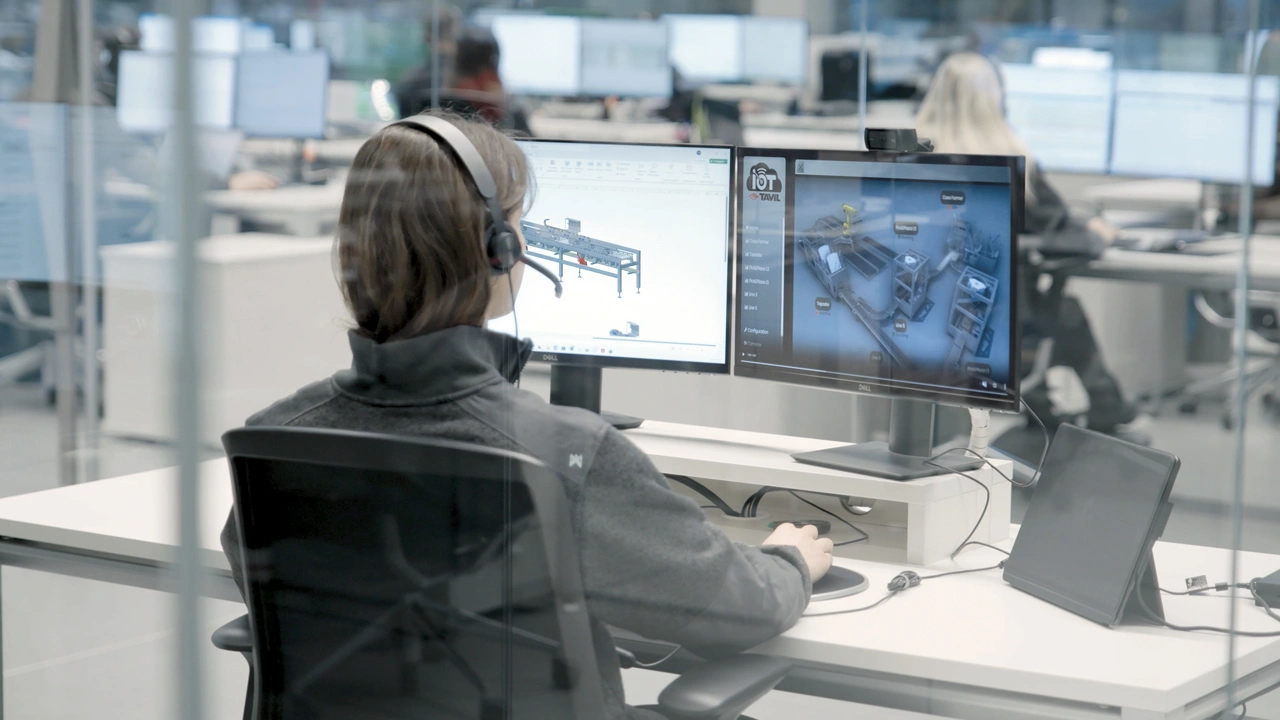
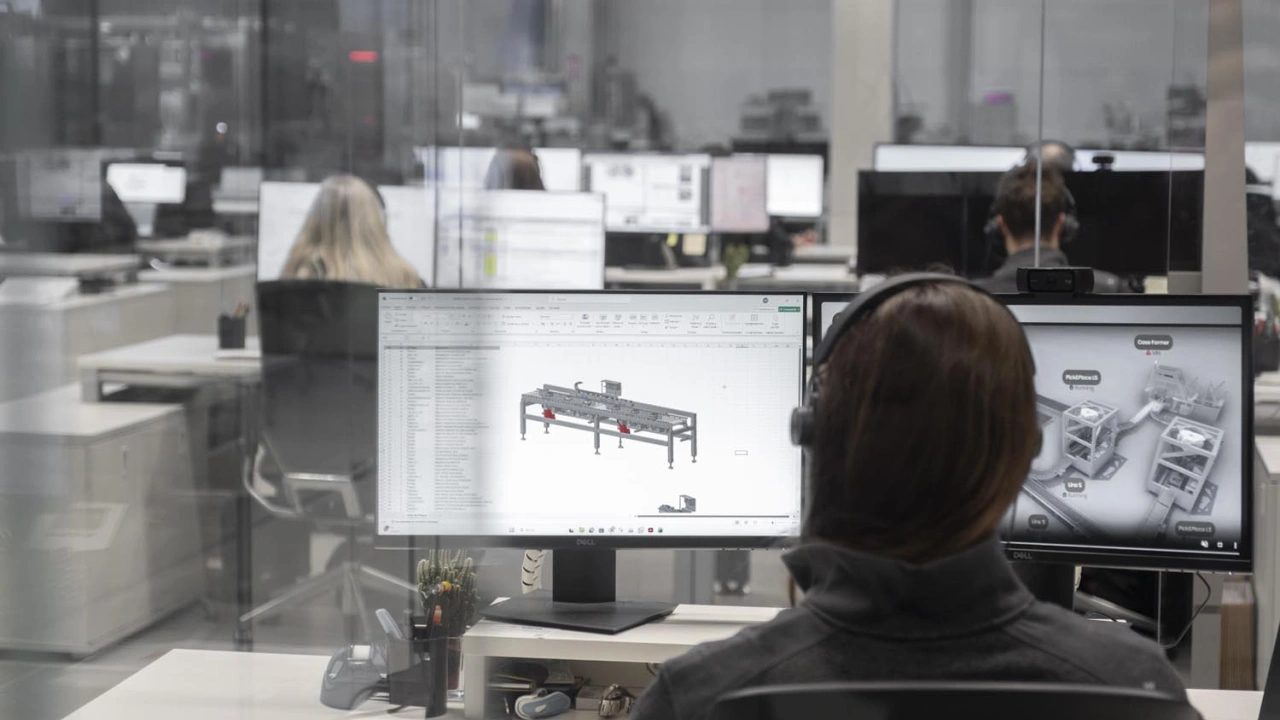
Productivity and performance analysis software based on OEE standards and remote monitoring. It allows identifying the status of the installation without human intervention and continuously improving productivity.
Real-time monitoring of IIoT and performance.
Productivity and performance analysis software based on OEE standards and remote monitoring. It enables automatic identification of facility status without human intervention, fostering continuous productivity improvement.
Continuous real-time monitoring of equipment and processes.
Real-time visualization of equipment status, with configurable time intervals.
Automatic generation of reports in PDF format.
Chronological records of equipment status.
Chronological tracking of alarm history.
Visual support and images linked to each registered alarm.
Seamless integration with the client's internal systems.
Comprehensive performance monitoring.
Track & Trace
Traceability, production control and labeling management. MESLAB is a multi-functional software created to label and manage the traceability of products, boxes and pallets throughout the entire process of production, packaging, palletizing and shipping.
Technology plug & play
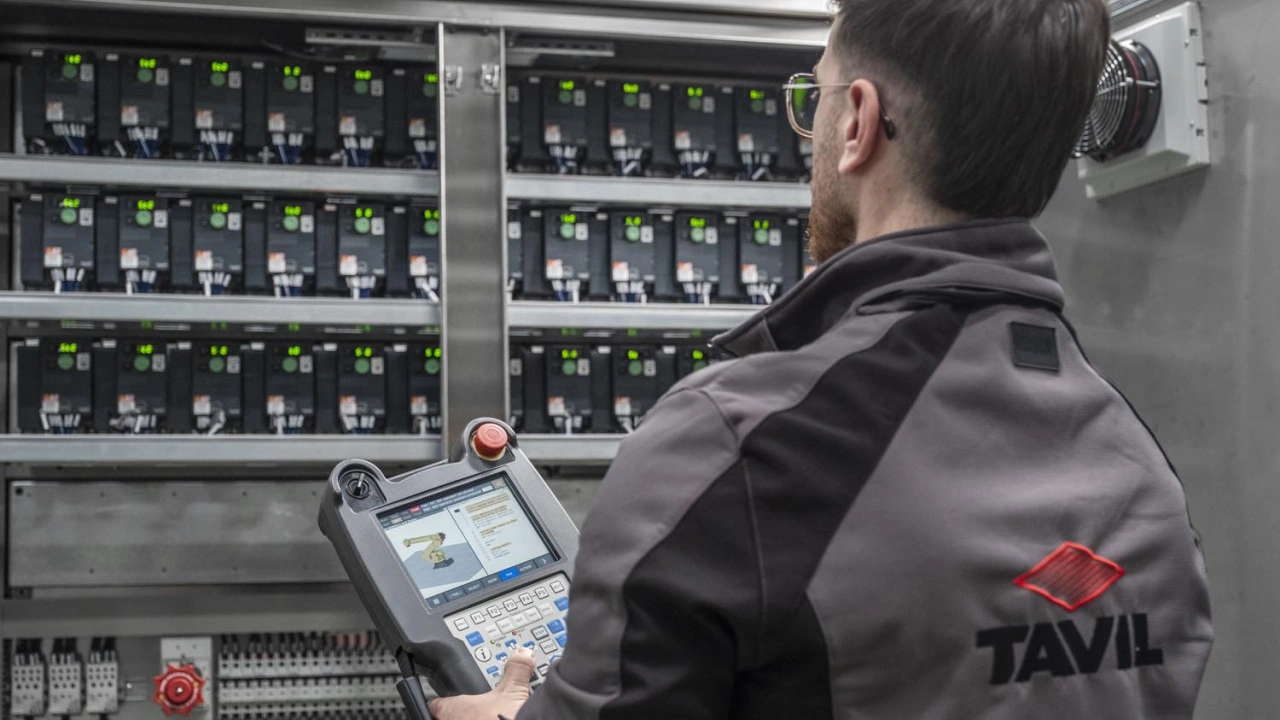
Plug & Play software ensures project productivity efficiency, FAT, installation, commissioning, SAT, and post-installation follow-up. Constant monitoring of the facilities ensures maximum OEE efficiency and reduces downtime.
01
Transform your production line with TAVIL
Do you want more information about digital solutions?
We'll analyze your situation and propose ways to optimize your production line, reduce costs, and modernize your company to take a step forward and secure its future.
FAQ's
When labor costs rise or the cost of hiring and firing workers increases, companies often invest in ways to reduce their exposure to labor costs.
- When production volume increases - When they have more than one production shift - When they want to achieve a Industry 4.0 factory
Efficiency is optimized by ensuring consistent processing speeds, reducing labor-intensive tasks, and using software to calculate optimal stacking patterns.
- When production is constant and the robot operates at maximum capacity - When there is no downtime in production - When production is homogeneous, allowing the robot to work continuously.
The modular design allows for the quick replacement or upgrade of specific sections without dismantling the entire line. This reduces technical complexity and the need for spare parts, while also increasing flexibility for future production modifications.
- Simplicity in layout proposals - Ability to automate confined spaces because the equipment is modular and accommodates different configurations.
- Capacity to add more modules in the future to increase line capacity.
- Constantly updated equipment
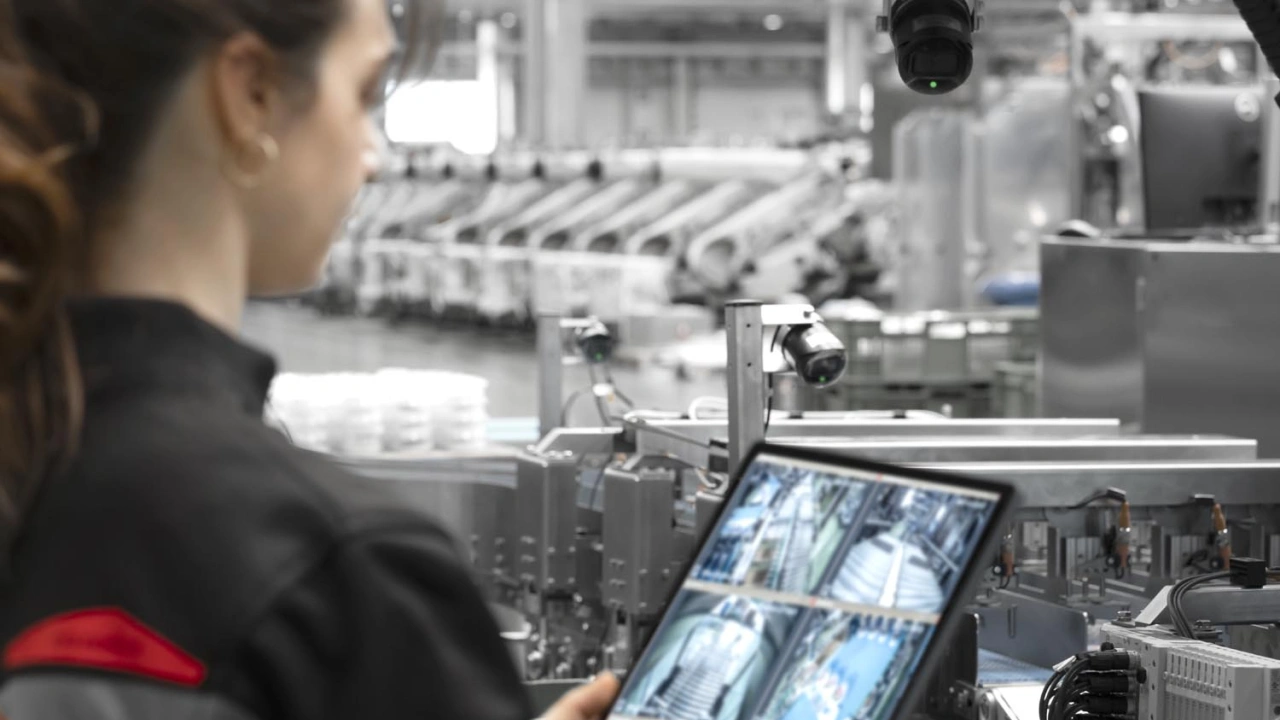
Machine vision systems improve quality control through high-speed box inspections, accurate product counting, verification of product shape, and placement in the desired final position.
- They allow the packing system to modify its movement patterns based on the received product. - They prevent production variations, allowing the robot to correct for discrepancies. - They enable quality control based on product shape and color.
Collaborative robots are preferred in scenarios with limited floor space and low production speeds that do not require high capacity or flexibility. This limitation means that installation costs are lower compared to those of industrial robots.
- When the product to be palletized is lightweight and the boxes are not at risk of breakage.