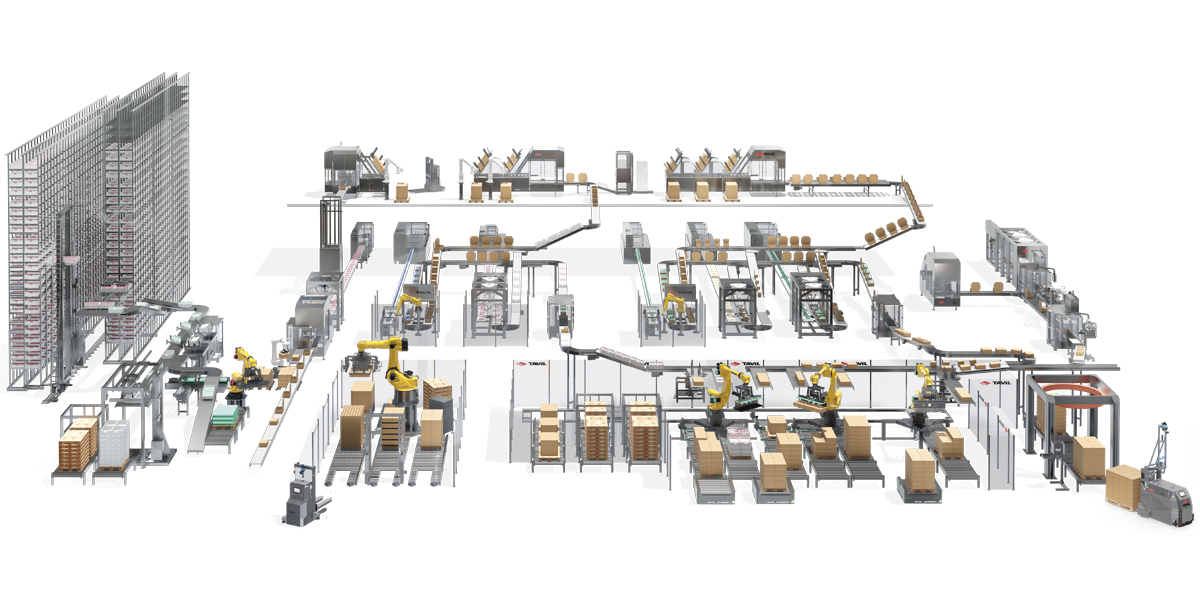
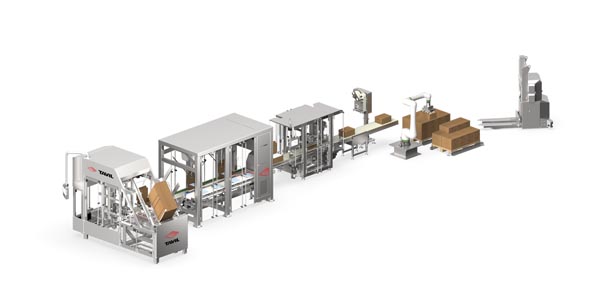
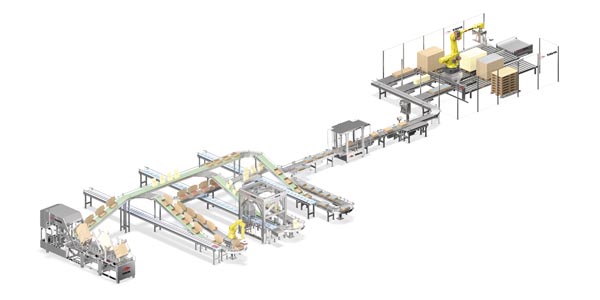
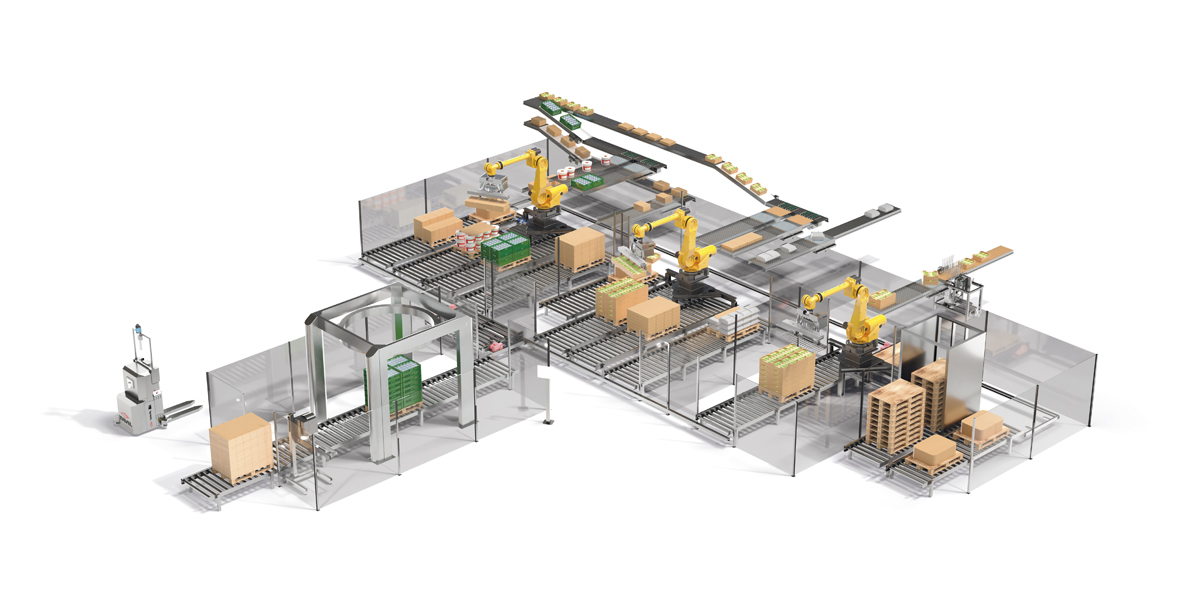
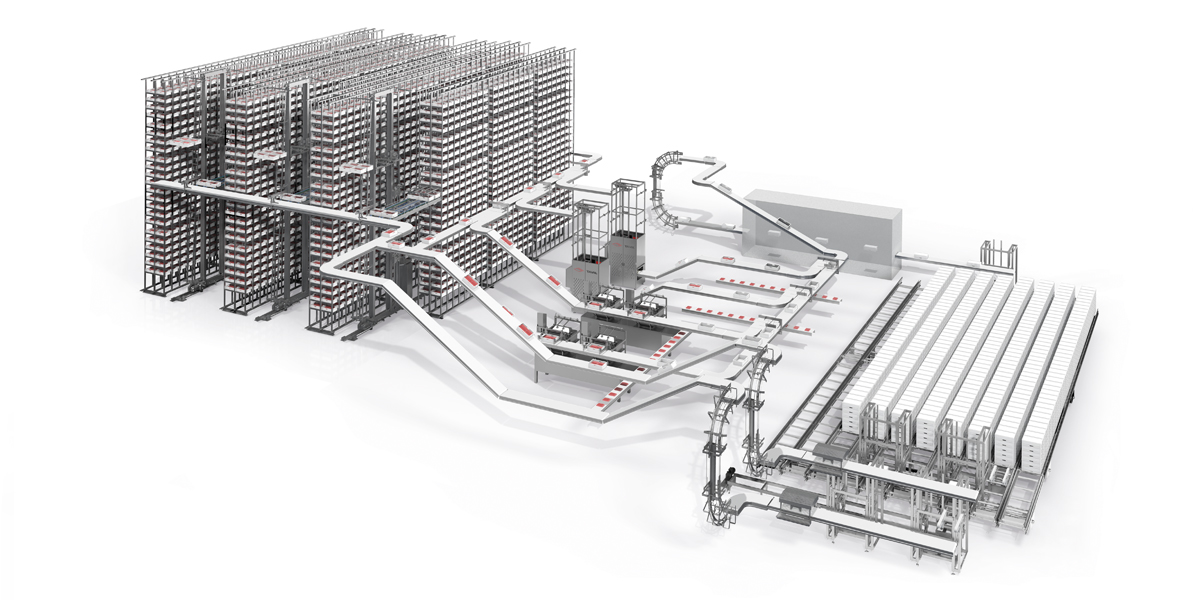
Handling solutions encompass all systems for transporting, storing, accumulating, diverting, orienting, and classifying products, boxes, or crates within a facility, ensuring a continuous flow between processes without unnecessary manual intervention. They typically include:
- Conveyors with adjustable widths and speeds
- Accumulation and flow regulation zones
- Automatic diverters based on format or destination
- Elevators, transfer systems, and level changes
- Integration with control and traceability systems
- Automated warehouses
Automated handling allows for the absorption of the entire flow of boxes or trays without manual intervention and stabilizes the flow between machines. It offers advantages such as:
- Reduced handling and ergonomic risks
- Better space utilization
- Increased OEE by reducing micro-stops and misalignments.
A well-designed handling system prevents bottlenecks through automated storage, buffer zones, bypasses, and controlled accumulation. Furthermore, it facilitates integration with vision systems, barcode scanning, and destination sorting, improving the overall efficiency of the plant.
The design of a handling system must consider all possible variations in formats and working conditions. Typically, the following are analyzed:
- Range of dimensions and weights of the units handled
- Environmental conditions (cold, heat, dust, humidity)
- Available space and layout constraints
- Future scenarios for new products and packaging
- Integration with control systems (PLC, SCADA, MES)
- The flow logic between the different production and shipping areas.
Integration typically includes:
- Sorting by format, order, or logistics destination
- Communication with WMS (Wholesale Management System) and shipping systems
- Inbound/outbound stations
- Management of loading priorities and sequences
- Complete traceability of units, boxes, and pallets



 }
}