
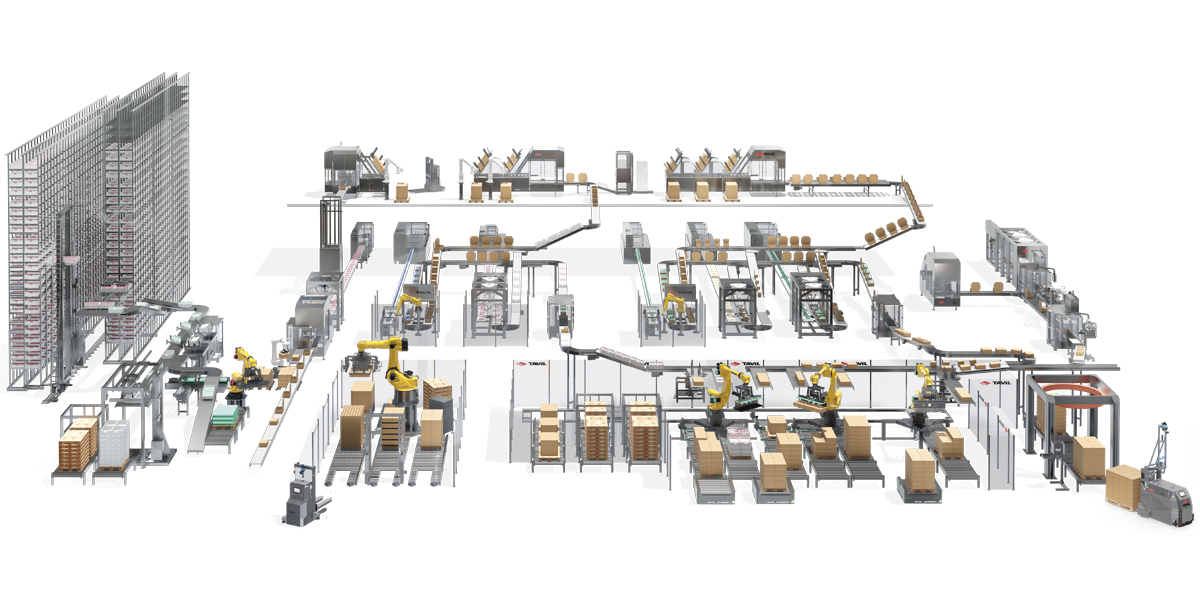
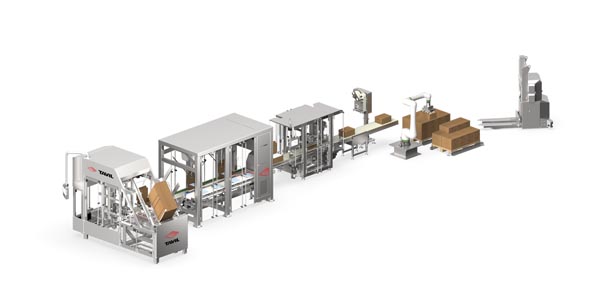
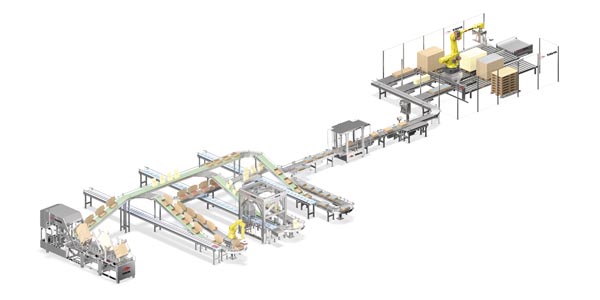


When labor costs rise or the cost of hiring and firing workers increases, companies often invest in ways to reduce their exposure to labor costs.
- When production volume increases
- When they have more than one production shift
- When they want to achieve a Industry 4.0 factory
 }
}
Digital 4.0 Solutions
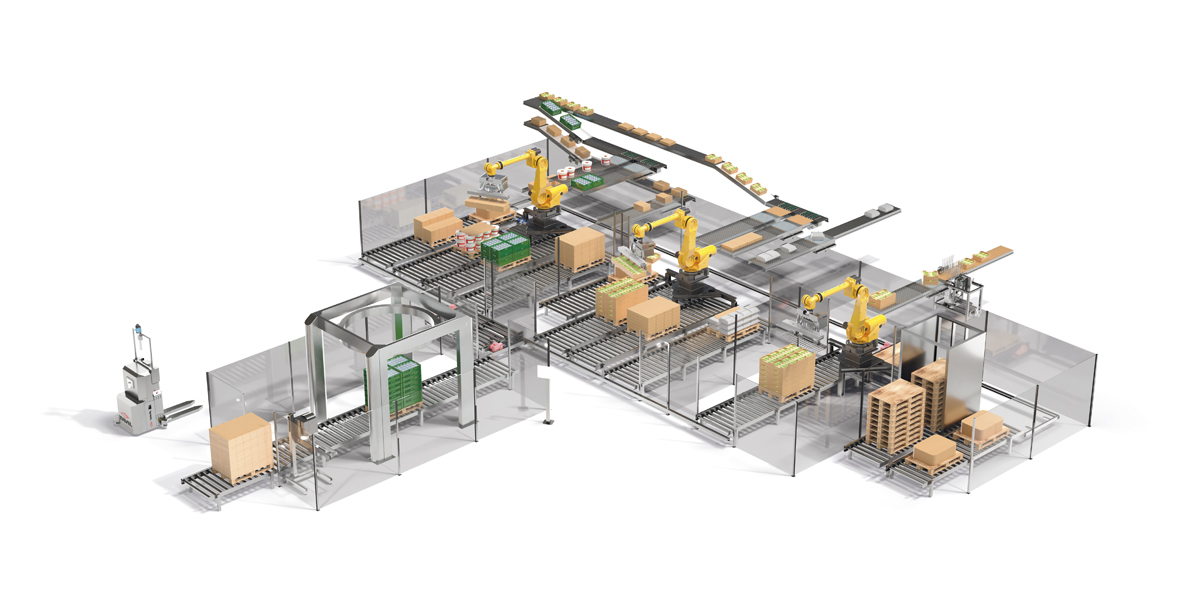
Efficiency is optimized by ensuring consistent processing speeds, reducing labor-intensive tasks, and using software to calculate optimal stacking patterns.
- When production is constant and the robot operates at maximum capacity
- When there is no downtime in production
- When production is homogeneous, allowing the robot to work continuously.
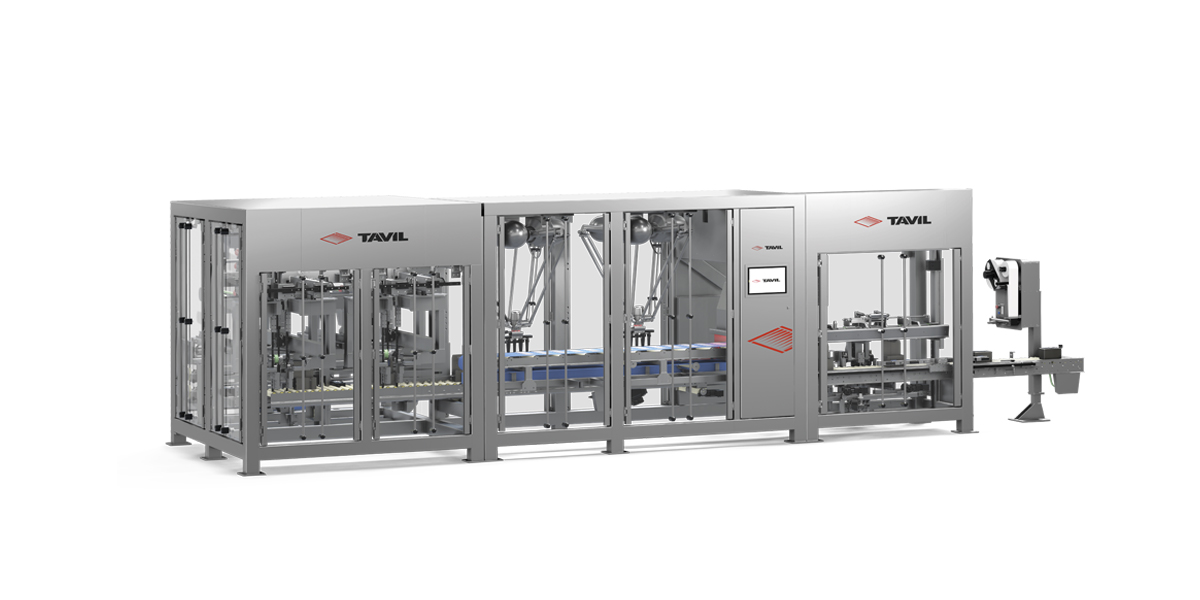
The modular design allows for the quick replacement or upgrade of specific sections without dismantling the entire line. This reduces technical complexity and the need for spare parts, while also increasing flexibility for future production modifications.
- Simplicity in layout proposals
- Ability to automate confined spaces because the equipment is modular and accommodates different configurations.
- Capacity to add more modules in the future to increase line capacity.
- Constantly updated equipment
Machine vision systems improve quality control through high-speed box inspections, accurate product counting, verification of product shape, and placement in the desired final position.
- They allow the packing system to modify its movement patterns based on the received product.
- They prevent production variations, allowing the robot to correct for discrepancies.
- They enable quality control based on product shape and color.
Collaborative robots are preferred in scenarios with limited floor space and low production speeds that do not require high capacity or flexibility.
This limitation means that installation costs are lower compared to those of industrial robots.
- When the product to be palletized is lightweight and the boxes are not at risk of breakage.
IoT offers users predictive maintenance instead of reactive maintenance. It monitors all parameters of the packaging lines to detect potential failures early and provides accurate information about their performance.
- It allows for video recording of equipment performance.
- It allows for troubleshooting equipment errors or failures using real-time video or photos.
- It allows the equipment supplier to remotely access the installation for monitoring.