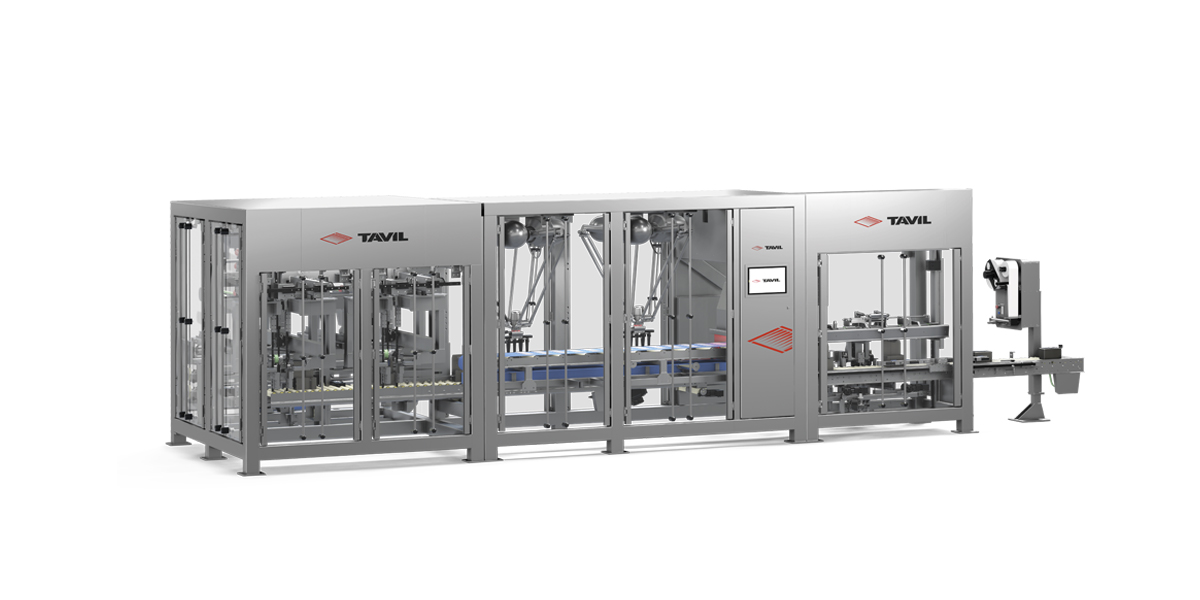
A multi-format packaging line handles jars of baby food of varying sizes during the same shift by automatically adjusting the format based on stored production recipes.
The system modifies gripping positions, grouping patterns, and box dimensions without requiring mechanical retooling, thus maintaining productivity and alignment accuracy.
Servomotor-controlled movements regulate positioning tolerances for small and large diameter jars, ensuring stable grouping and uniform box loading across multiple product lines.
A motion-controlled packaging system protects fragile glass jars of baby food by:
- Regulating placement speed and acceleration
- Controlling gripping pressure
- Precisely orienting the product
- Minimizing impact during placement and insertion
- This reduces the risk of breakage while maintaining cycle time stability.
Motion control algorithms adjust deceleration curves and contact force according to the jar's weight and format configuration.
Frequent SKU changes in the production of baby food purees and packaging are managed through an automatic, recipe-based reconfiguration that updates:
The transition occurs without manual adjustments, reducing downtime in highly variable production environments.
Digital format management ensures repeatability and traceability in short production runs and seasonal product launches.
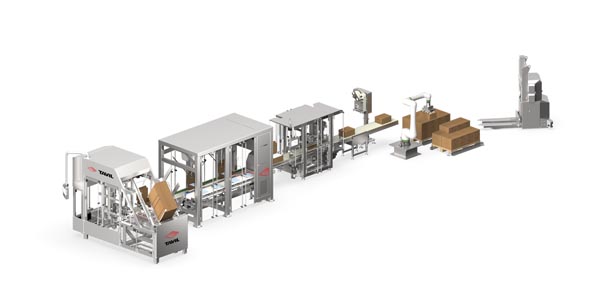
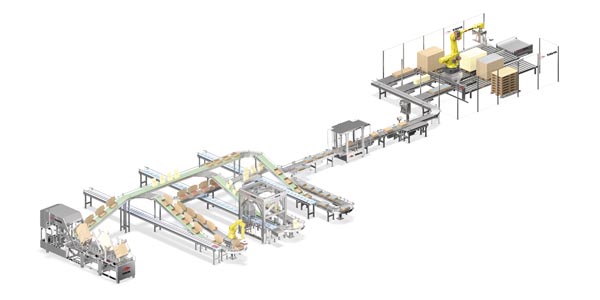
A multi-format packaging system accommodates both cardboard boxes and flexible pouches for baby food, automatically adapting the gripping systems, orientation control, and box configuration.
This enables consistent secondary packaging of rigid and semi-flexible containers within the same end-of-line architecture.
Controlled motion handling is particularly important for lightweight pouches, where positioning accuracy and product stability influence the uniformity of the pallet load.
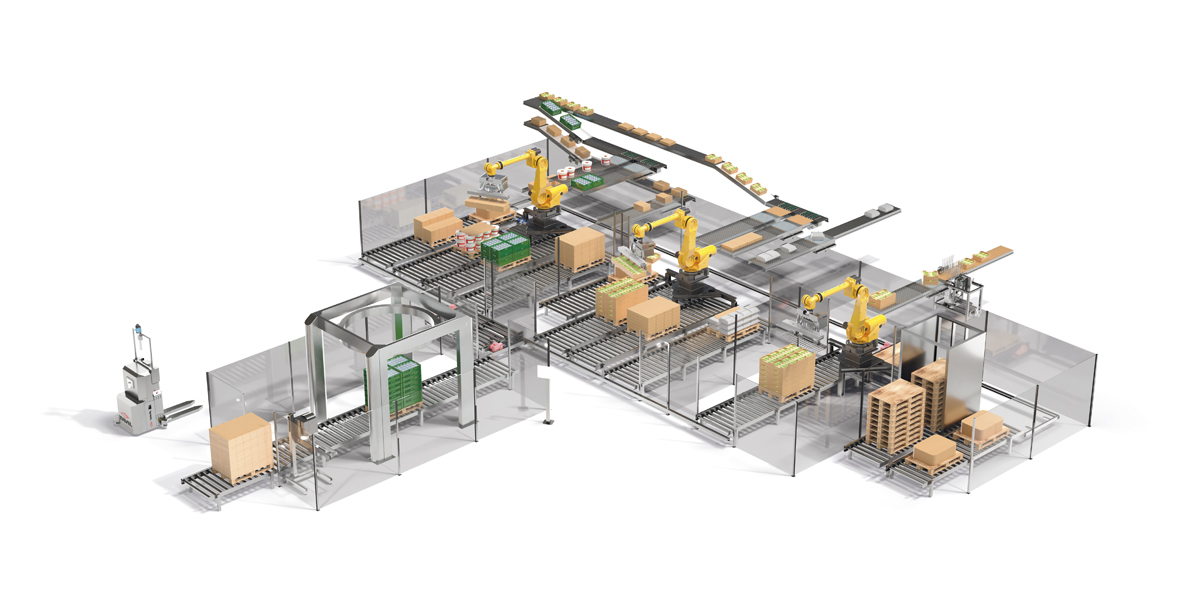
A programmable palletizing system adapts to boxes of light and mixed baby food by:
This ensures pallet stability for boxes of varying dimensions and product densities.
Dynamic pattern generation allows for the production of mixed products while maintaining transport resistance and meeting warehouse handling requirements.
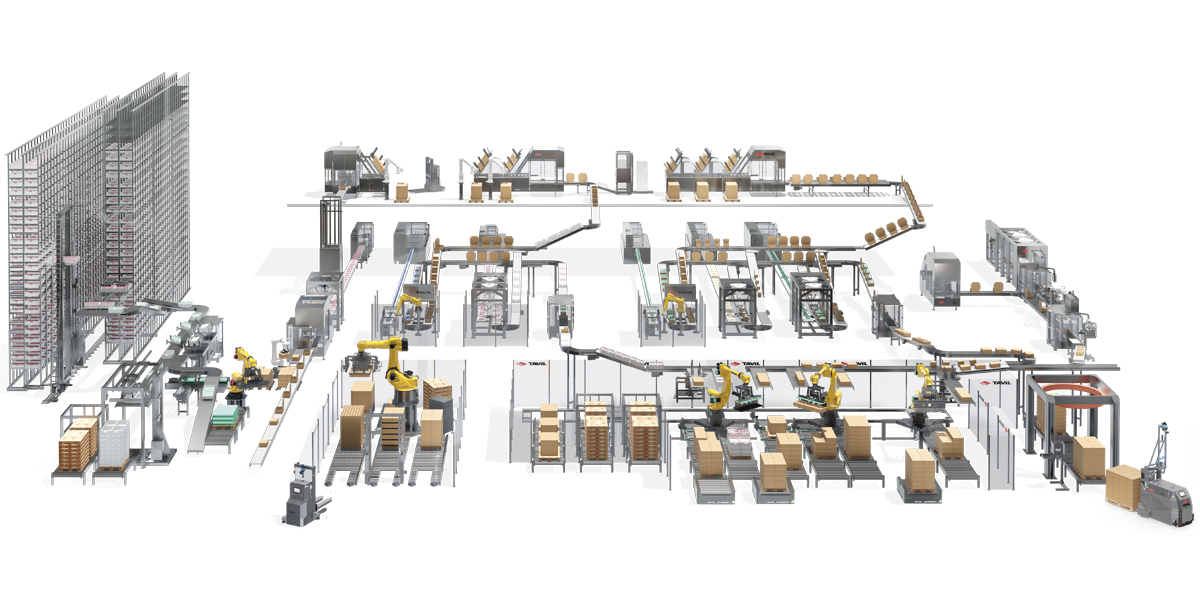
Multi-format end-of-line automation in infant food plants offers:
- Reduced changeover time between product lines
- Increased equipment availability
- Controlled handling of fragile packaging
- Adaptability to frequent product innovation
- Integrated packaging and palletizing control
These features guarantee consistent production performance in regulated infant nutrition environments.
These systems are particularly relevant in facilities with short product lifecycles, strict hygiene standards, and a growing diversification of product lines.



 }
}