- Packaging and palletizing parameters must be automatically adjusted.
- These systems maintain operational continuity without requiring mechanical retooling.
Applications typically include powdered supplements, liquid nutrition, and portioned formats. Automatic adjustments can encompass box dimensions, product grouping logic, and pallet arrangement configurations without requiring mechanical retooling.
Frequent SKU changes are managed through recipe-based automation that controls servomotor movements and configuration parameters.
Box layouts, grouping patterns, and pallet stacking sequences are automatically adjusted, reducing downtime and ensuring repeatable transitions between product nutritional references.
Digital format management enables traceable and consistent reconfiguration, which is especially relevant in facilities with high product turnover and batch production.
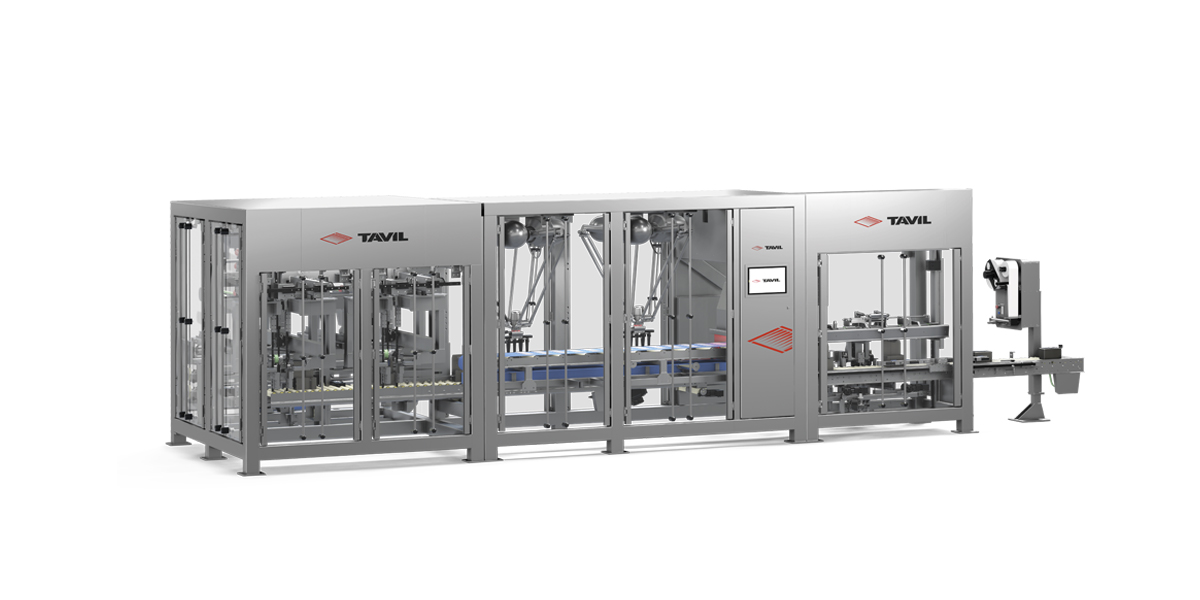
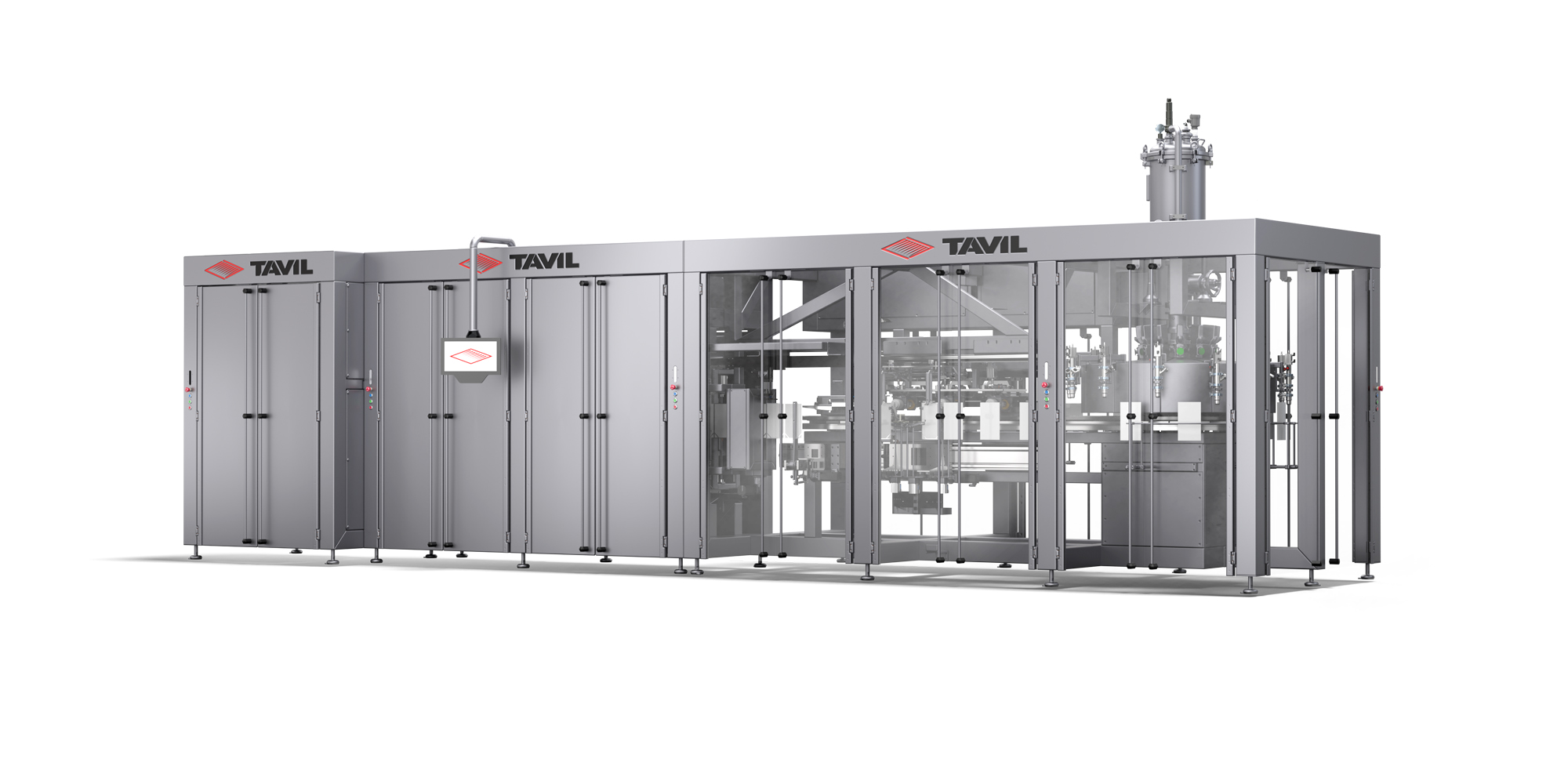
A controlled, multi-format packaging system handles cans, bottles, and sachets, automatically adjusting gripping systems, product orientation, and box configuration. This ensures consistent secondary packaging performance across both rigid and flexible nutritional formats.
Motion control algorithms regulate placement accuracy and handling force, maintaining package integrity and cycle time stability.
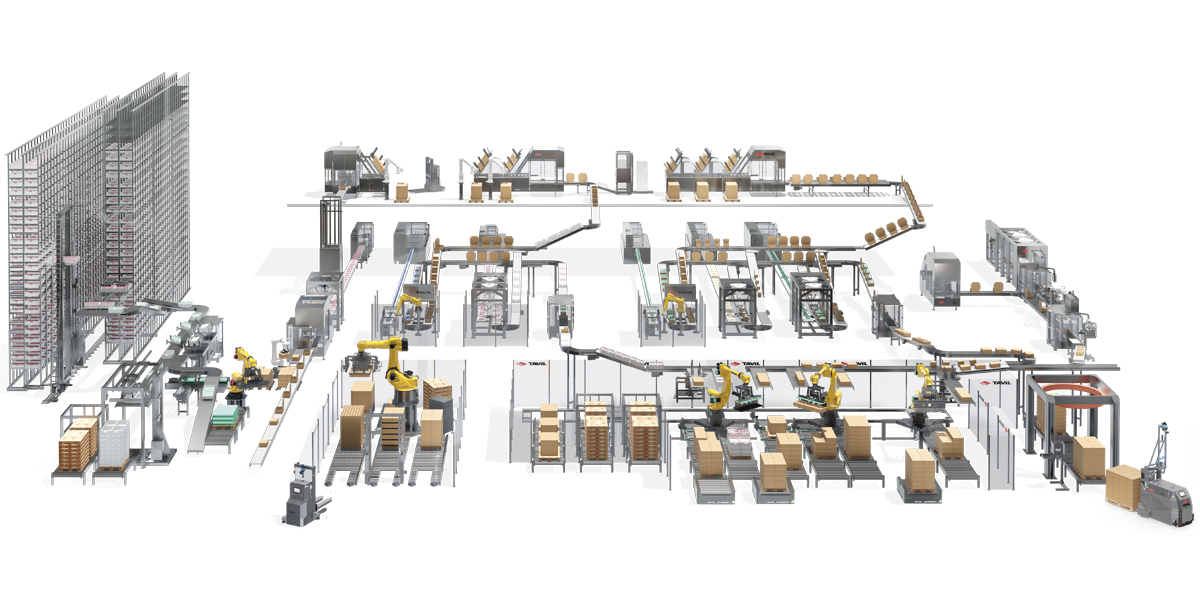
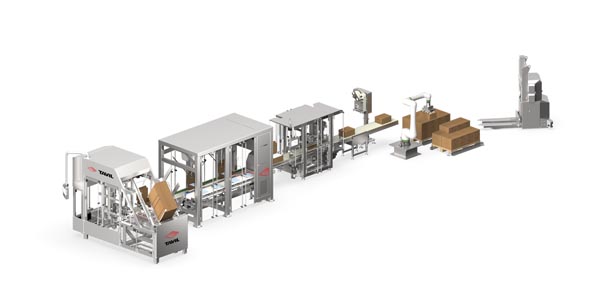
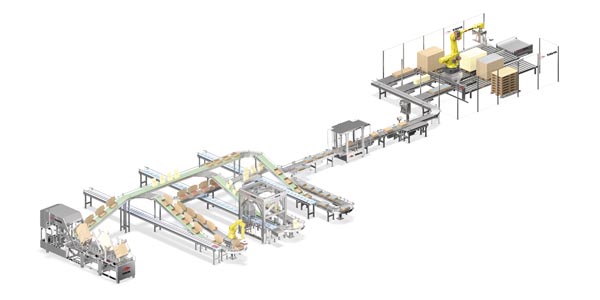
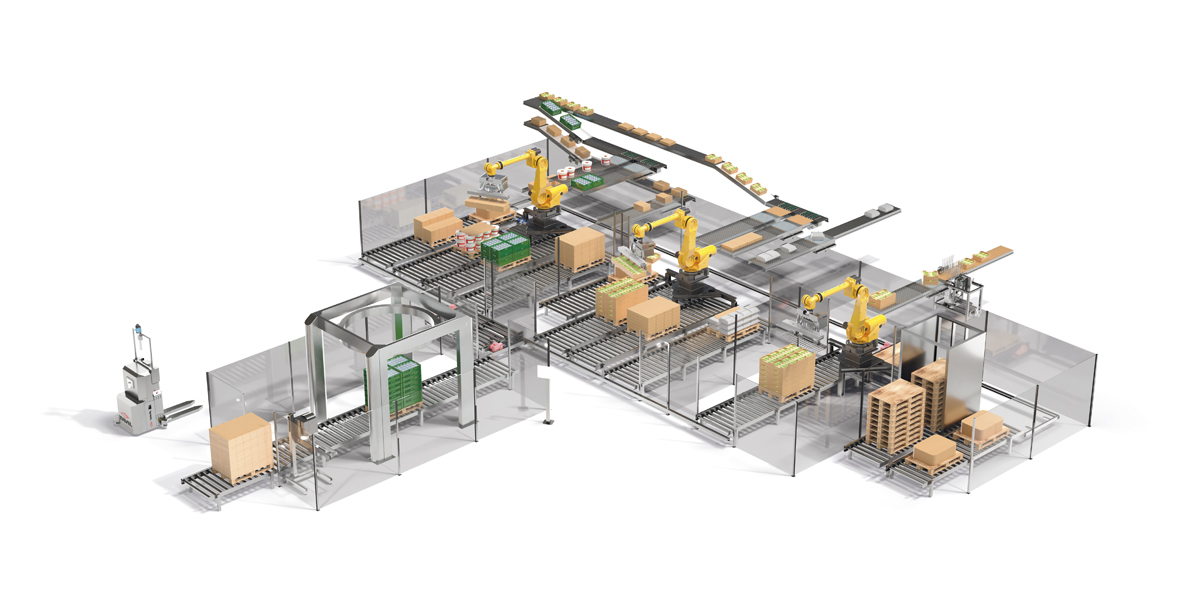
Box packaging is integrated with palletizing through:
- Synchronized control architecture
- Alignment between box output and layer formation
- Automatic pallet configuration adjustment
- Unified format change logic
- Balanced coordination of the production flow at the end of the line.
This ensures stable performance during SKU transitions.
Integration typically includes centralized PLC control, automatic pallet pattern calculation, and data exchange with upstream filling or inspection systems.
A programmable palletizing system with automatic layer configuration adapts to different box sizes by modifying stacking patterns, orientation, and load distribution parameters.
The system guarantees stable pallet formation without the need for manual mechanical adjustments.
Dynamic pallet pattern generation allows for handling mixed products while maintaining transport stability and warehouse efficiency.
Multi-format automation in nutrition plants offers:
- Reduced changeover times
- Increased line availability
- Adaptability to high SKU variability
- Uniform handling of different packaging types
- Integrated packaging and palletizing flow
- Greater batch-to-batch repeatability
- Reduced manual intervention
These features promote controlled and efficient production in regulated nutrition manufacturing environments.
These systems are especially relevant in plants that produce clinical nutrition, dietary supplements, and specialized formulations with frequent product turnover.



 }
}