Working with multi-format boxes means managing different box designs and dimensions within the same automated system. The system automatically adapts mechanical and control parameters to maintain production continuity despite format variations.
A multi-format environment can include:
- Automatic format changeover
- Servo-motorized adjustments
- Recipe management via HMI
- Adaptation to different box dimensions
- Synchronization between end-of-line modules
- Elimination of manual intervention
A standard installation is designed for a single model or limited range of box sizes. A multi-format installation can handle different sizes and structural designs through automatic changeovers, reducing downtime and increasing operational flexibility.
Multi-format installations can incorporate:
- Pre-programmed recipes
- Automatic guide and position adjustments
- Digital parameter configuration
- Simultaneous adaptation of multiple machines
- Elimination of manual mechanical changes
Factories demand multi-format solutions when managing product rotation or packaging changes. This technology allows adaptation to new configurations without compromising efficiency or end-of-line stability.
Multi-format solutions enable:
- Reduced changeover times
- Increased line availability
- Management of multiple SKUs
- Flexible production with different formats
Multi-format printing allows for switching between formats with minimal setup time, simplifying planning and reducing the need to group large batches by format. It improves responsiveness to demand fluctuations.
In production planning, multi-format printing offers:
- Flexibility for short batches
- Reduced downtime
- Quick adjustments between product references
- Greater operational stability
- Optimized production sequences
A multi-format environment can integrate different box structural designs, provided the installation is configured to automatically adapt to their dimensions and characteristics.
Multi-format systems can work with:
- Plateax box
- Display box with strap
- Twinbox display boxes
- Lid-and-bottom display boxes
- Reinforced boxes and trays for transport (various heights, lengths, and widths)
Multi-format management reduces downtime associated with mechanical adjustments and improves end-of-line availability. It allows for stable production rates even with frequent product changes.
The impact on efficiency can be seen in:
- Increased operational availability
- Reduction in micro-stops
- Improved throughput per format
- Less reliance on manual intervention
- Optimization of performance indicators
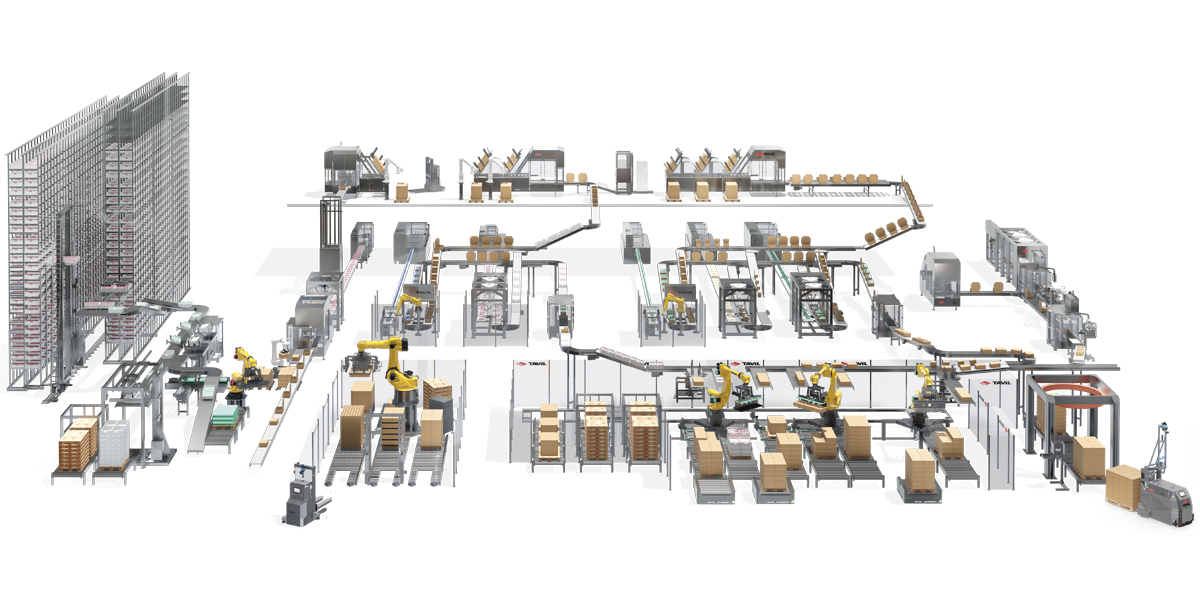
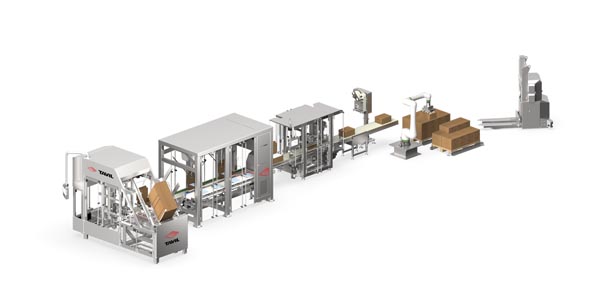
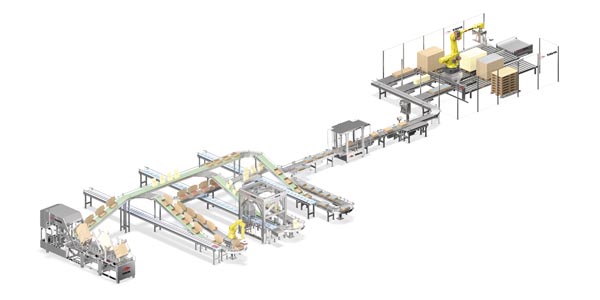
Yes. Multi-format technology can be integrated with case packing, sealing, palletizing, and conveying within a complete solution, allowing all equipment to work seamlessly with different formats.
Integration can include:
- Automatic format synchronization
- Coordinated adjustments between modules
- Centralized recipe configuration
- Joint adaptation of case packing and palletizing
- Continuous flow without bottlenecks
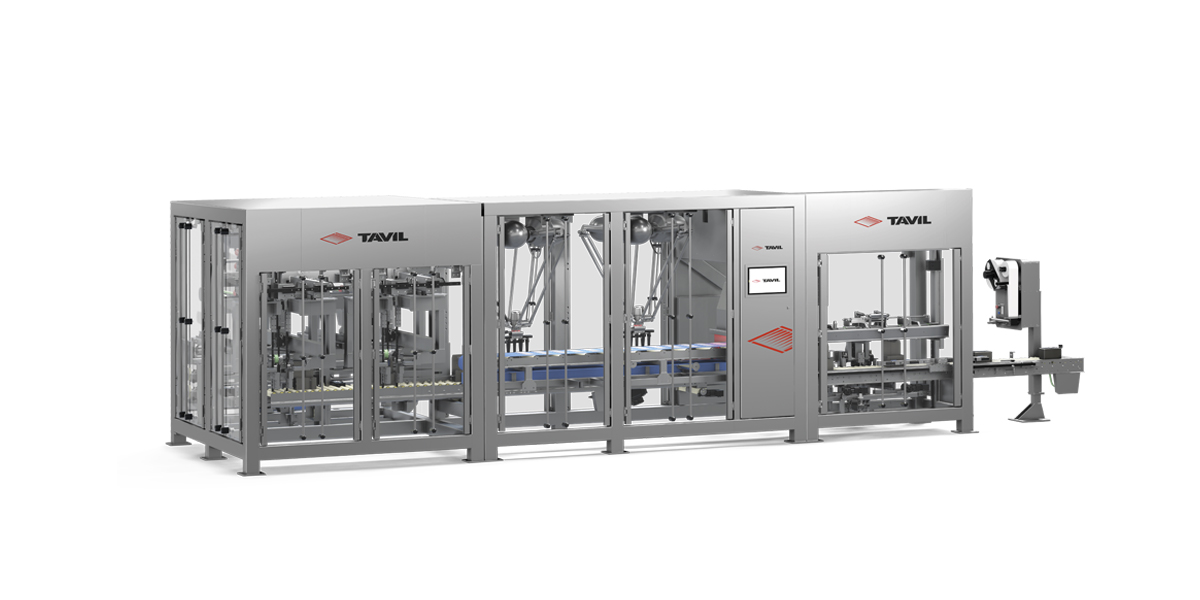
Multi-format technology in a P&P case packer allows for automatic adaptation to most recipes and configurations without mechanical adjustments.
Its main advantages are:
- Reduced changeover times, automatic changeover of conveyors, groupers, grippers, etc.
- Minimized number of grippers on the line
- Compatibility with future product references
- Scalability through the creation of new formats via software
Digital recipe management allows for the addition of new formats without mechanically modifying the line
Proper handling of the product depends primarily on the design and validation of the gripper. The following are crucial:
- Gripper customization according to geometry and weight
- Appropriate selection: suction cup, mechanical, or hybrid
- Precise control of forces and accelerations
- Preliminary validation tests with the actual product (FAT).
Defining the gripping system is one of the most important phases of the project.
Conducting preliminary tests with the client allows for adjustments to materials, contact surfaces, and gripping strategies before manufacturing the final tooling.



 }
}