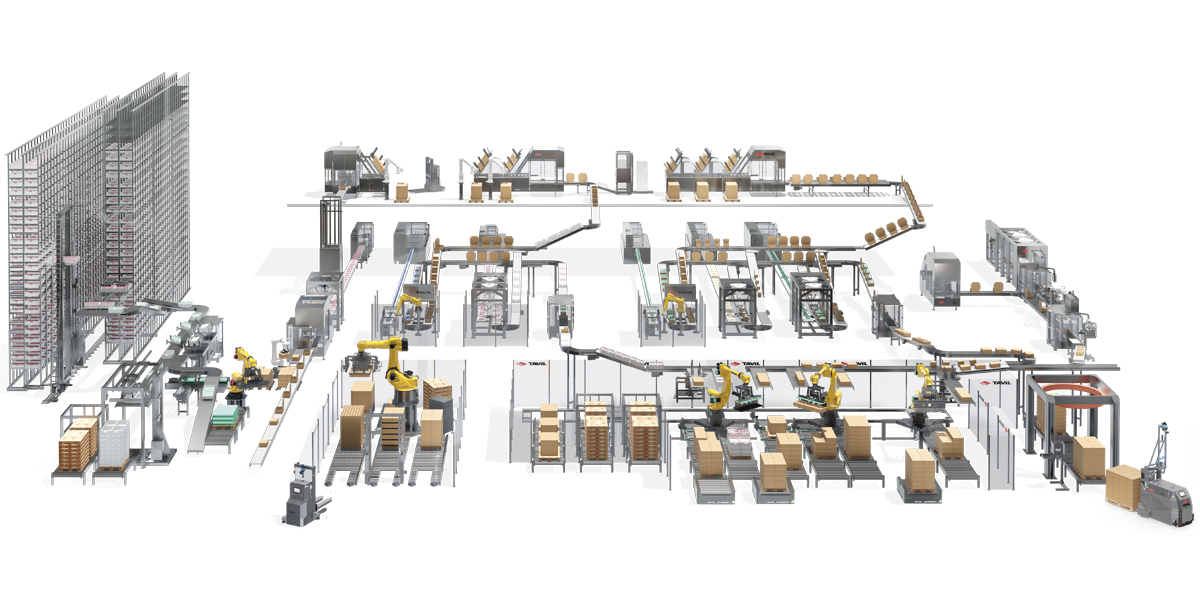
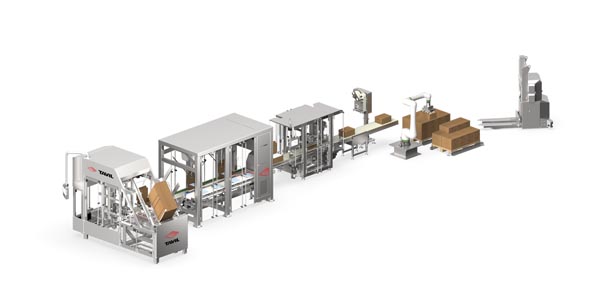
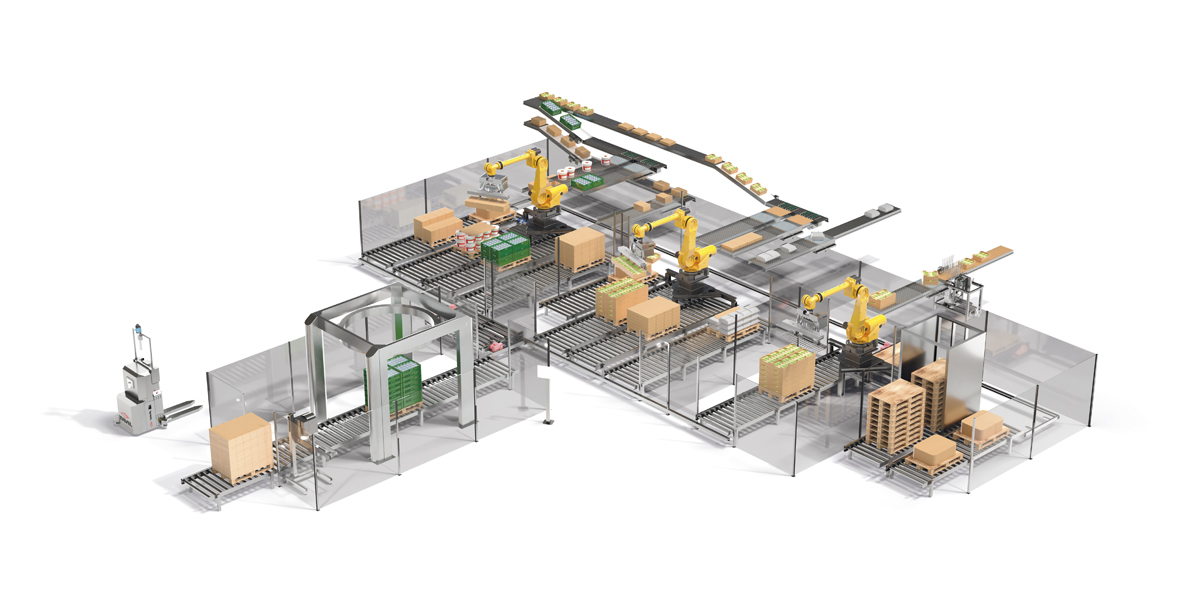
A multi-format palletizing system stacks different sizes of boxes, bags, or trays onto various types of pallets, changing the pattern according to the recipe. This is often key when there are:
- Multiple packaging formats in the same plant
- Different pallet standards by country or customer
- Variable load height requirements
- Need to change patterns without mechanical adjustments
- Integration with automatic wrapping and labeling
Multi-format robotic palletizing allows for the management of multiple product lines without physical effort for operators and with greater repeatability. It offers benefits such as:
- Consistent pallet pattern quality and stability
- Rapid recipe changes between different products
- Ability to operate multiple shifts with the same cell
- Reduced reliance on manual labor during peak demand
Multi-format palletizing is preferable when flexibility is the priority. It's usually the best option if:
- Many SKUs are managed
- Format changes are expected in the coming years
- There are different customers with varying requirements
- Space for additional cells is limited
- A return on investment (ROI) linked to flexibility is desired
To define a multi-format palletizing system, information is gathered covering the entire range of planned operations. This typically requires:
- Minimum and maximum dimensions and weight of boxes or sacks
- Types and sizes of pallets used (EU, UK, US, etc.)
- Desired stacking patterns by format
- Production rates per line and number of lines to be serviced
- Requirements for film wrapping, labeling, and mixed pallets
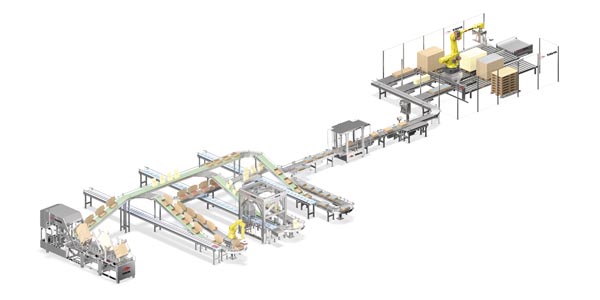
A single multi-format robot can palletize multiple lines as long as the sum of production rates and format changes is compatible with its cycle capacity. Typically, the following is analyzed:
- Combined production fits within the robot's cycles
- Distances between lines and pallets are manageable
- Patterns allow for efficient picking grouping
- Recipe changes do not generate downtime. Technical extension:
In multi-format solutions, programming prioritizes which line to service at any given time and how to group picks using stackers.
Yes, in flexible palletizing systems it is possible to modify or create new patterns at no cost, provided the new configurations are within the equipment's design parameters:
- Creation of new patterns from the HMI
- Programming using parameterized recipes
- Automatic adjustments with servo-driven axes
- Preliminary virtual simulation for validation of the new pattern
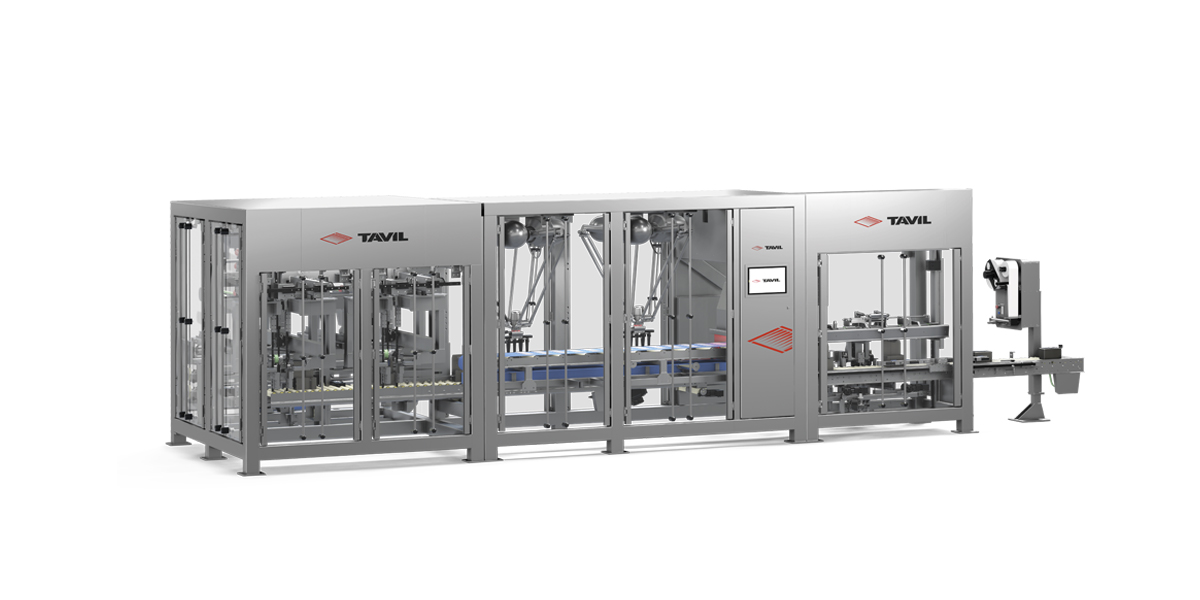
Yes. A flexible automatic palletizing system can work with different types of packaging as long as it's designed with multi-format technology for grouping and handling boxes or products.
- Automatic recipe change from the HMI
- Servo-driven adjustments without changing parts
- Multi-format gripping tools, adaptable to different box and product sizes
- Automatic format changes for working with boxes, trays, base-lids, plastic trays, bales, shrink packs, jars, cans, etc.
Yes. A single palletizing system can handle and place both cardboard and plastic interlayers if it is equipped with a flexible gripping system and specific programming for both materials.
Plastic interlayers typically require greater control of adhesion and separation, while cardboard demands dimensional stability and flex control. With a combined gripper and self-adjusting parameters, the same palletizing system can switch between different types of interlayers without any mechanical changes.
In multi-format palletizing solutions, a new box or product can be added via touchscreen, automatically generating the new pallet format without programming.
- New recipe creation from the HMI by entering new box or product dimensions.
- Automatic generation of optimized pallet patterns with customization options.
- Automatic adjustment of all equipment to begin working with the new pattern without programming.
An automated, multi-format palletizing system with a robot can simultaneously palletize between 5 and 10 SKUs in a single palletizing cell.
The number of simultaneous stations will depend on the size of the boxes or products, their speed, their palletizing pattern, and the type and quantity of interlayers added to the palletizing pattern.



 }
}