
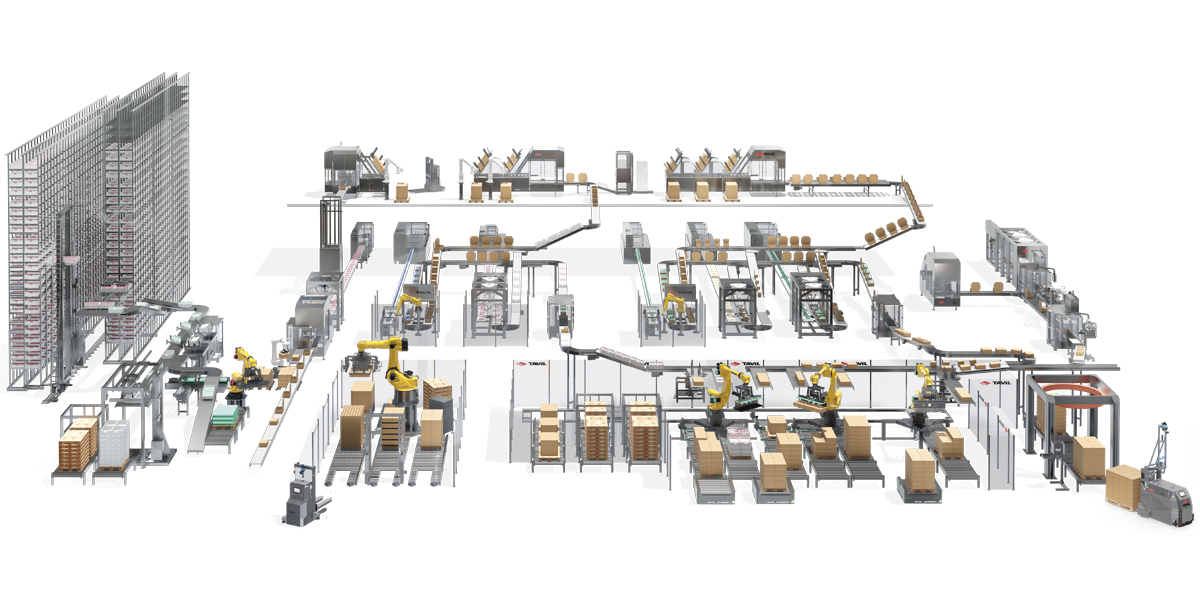
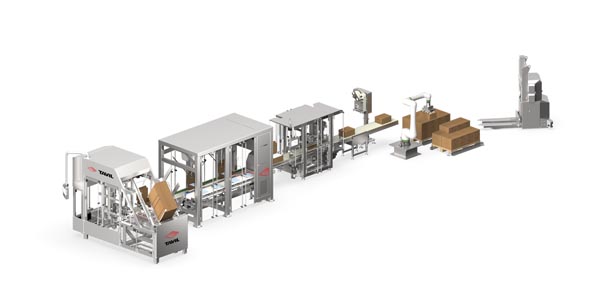
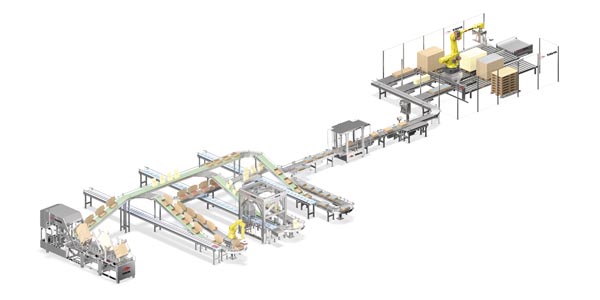
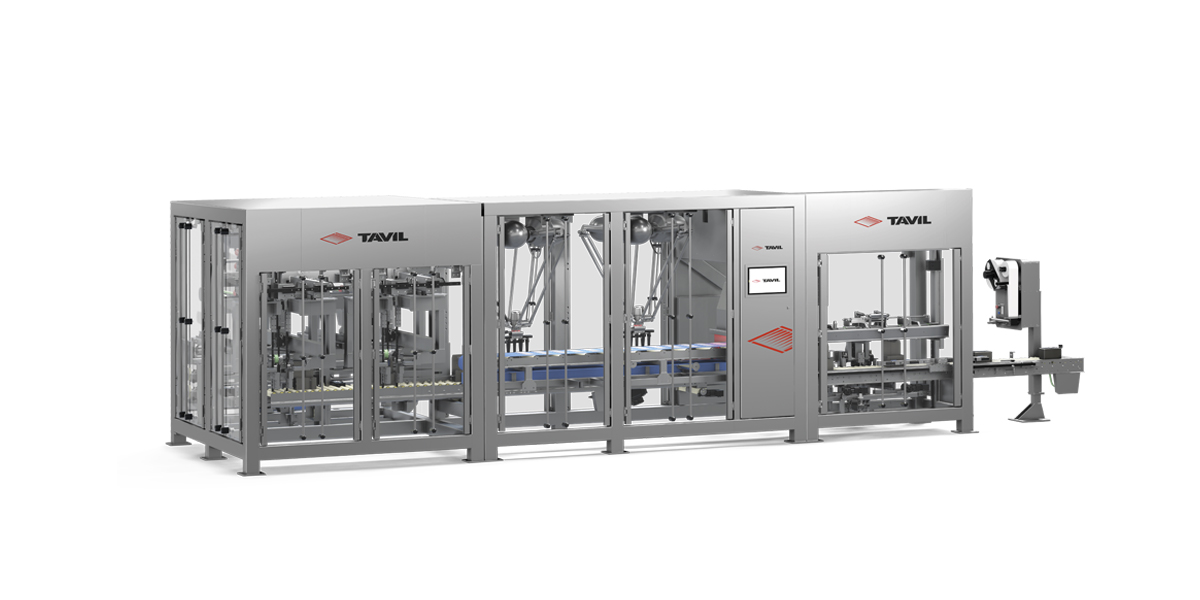


Multi-format technology brings significant value to manufacturers of home care products, as it allows a single line to automatically adapt to multiple references, styles, and packaging sizes.
 }
}
Sectores: Otros
The systems are designed to efficiently handle all formats with minimal downtime. Changeovers between SKUs will be considered from the conceptual design stage to maintain line performance.
Proper buffering ensures the entire system has a healthy supply of boxes whenever that specific format is required.
Yes, the multi-format technology allows you to program up to 70 different recipes into the system. No manual adjustments are required.
In the household products industry, where products like detergents, household cleaners, aerosols, and bags are processed on the same line, loading must be flexible and gentle. Loading using a pick-and-place system with the appropriate gripper is the best option.
Multi-format packaging and palletizing systems feature a modular design that allows capacity to be increased as demand grows. The modules are designed to integrate with existing equipment with minimal or no modifications.
Multi-format technology provides significant operational, end-user, and quality advantages for manufacturers in the office supplies industry who manage a wide variety of SKUs with frequent product changes.
In general, a gripper designed for stationary products can handle different references; depending on the size, weight and shape of the product, additional tools or adjustments are required for reliable handling.
The quick-adjust clamps can be replaced in just a couple of minutes. The line only needs to be stopped for the time required to complete this process.
Depending on the different SKUs, the multi-format technology offers format changes in just a few seconds.
Multi-format technology typically integrates industrial-grade 2D machine vision systems to ensure the correct orientation of products in the box.
Yes, the multi-format technology is based on independent modules, which means the system can grow by adding additional packaging and palletizing components.
Multi-format technology is especially valuable in the body care industry, as manufacturers handle a wide range of references, offering flexibility and efficiency for items such as lotions, shampoos, gels, creams, deodorants, and beauty products.
Multiformat technology manages high shape variability by combining vision-guided automation, adaptive clamping system and fully automatic format changes.
Yes, in multi-format systems, all format changes are fully automatic, including guides, tool settings, grip parameters, and vision recipes.
Adding SKUs to a multi-format line is simple, guided, and easy to use. Everything is done through a recipe-based interface and automatic configuration tools.
Multi-format systems connect very easily to existing machines using standard industrial communication protocols and fully configurable interfaces.
Yes, the modular architecture allows customers to start with essential automation and later expand the line as their automation needs evolve.
Multi-format technology is extremely effective in the power supply industry, where there is a wide variety of SKUs, many packaging formats and frequent changes, due to its flexibility, accuracy and efficiency.
Yes, all Multiformat systems are fully automated, including mechanical guides, robot paths, packaging patterns, and vision recipes. No tools or manual adjustments are required.
Multi-format palletizing systems fully support custom palletizing patterns, including cable reels, wire reels, electrical kits, bundled items, and any product that does not stack in traditional patterns.
Yes, the multi-format technology is fully capable of handling retail-ready boxes, including base and lid, trays, and perforated boxes with tear-off seal.
Multi-format technology synchronizes upstream and downstream equipment through a combination of real-time communication, intelligent conveyor belt control, visual monitoring, and adaptive robot speed regulation.
Yes, Multiformat Technology supports the integration of barcode reading, label verification, and serialization systems. These functions can be integrated with new systems, or we can seamlessly connect with any third-party inspection or serialization provider you already use at your facility.